Goodbye, Barcode. What Does That Little Square Know About Me?
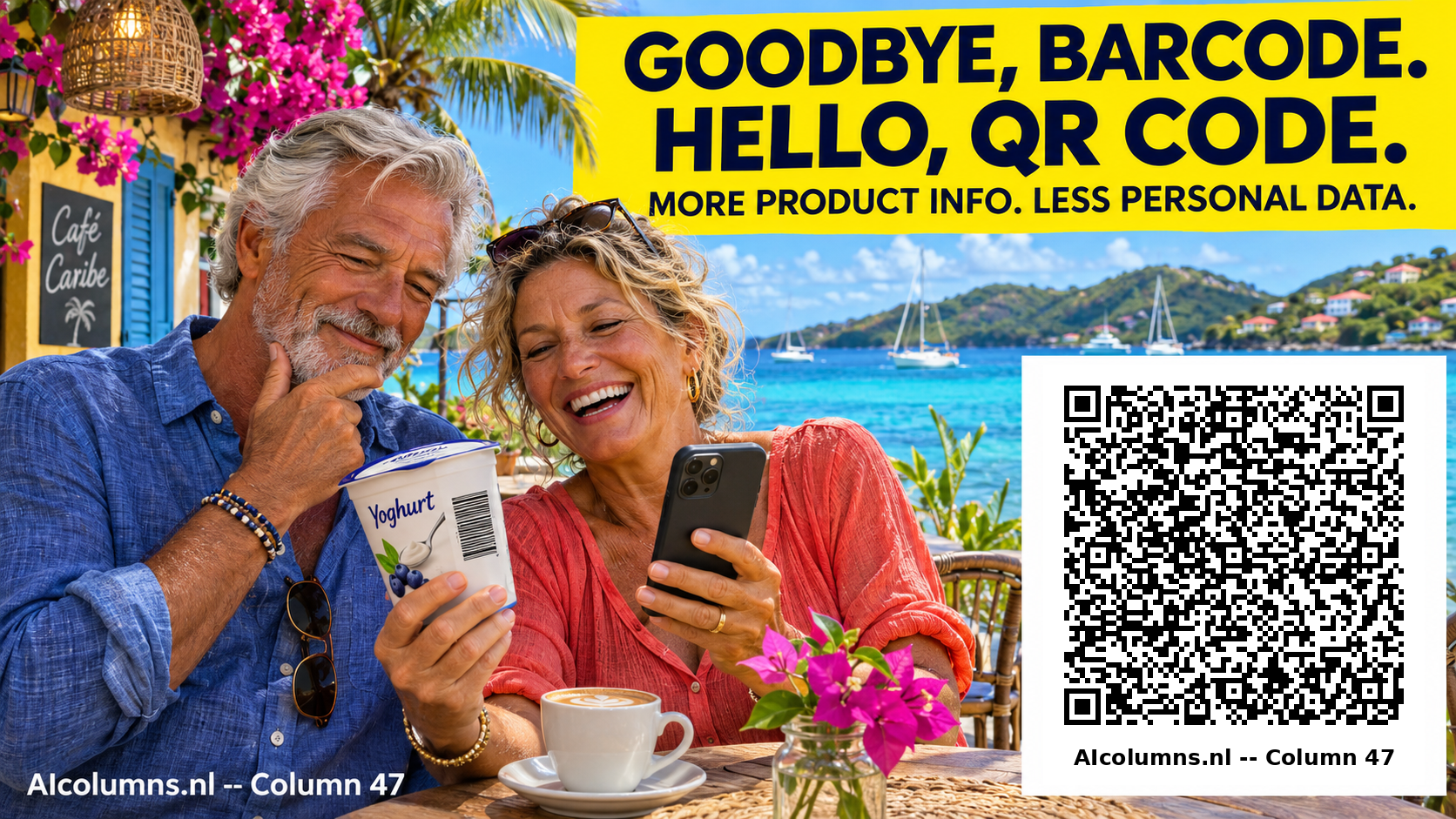
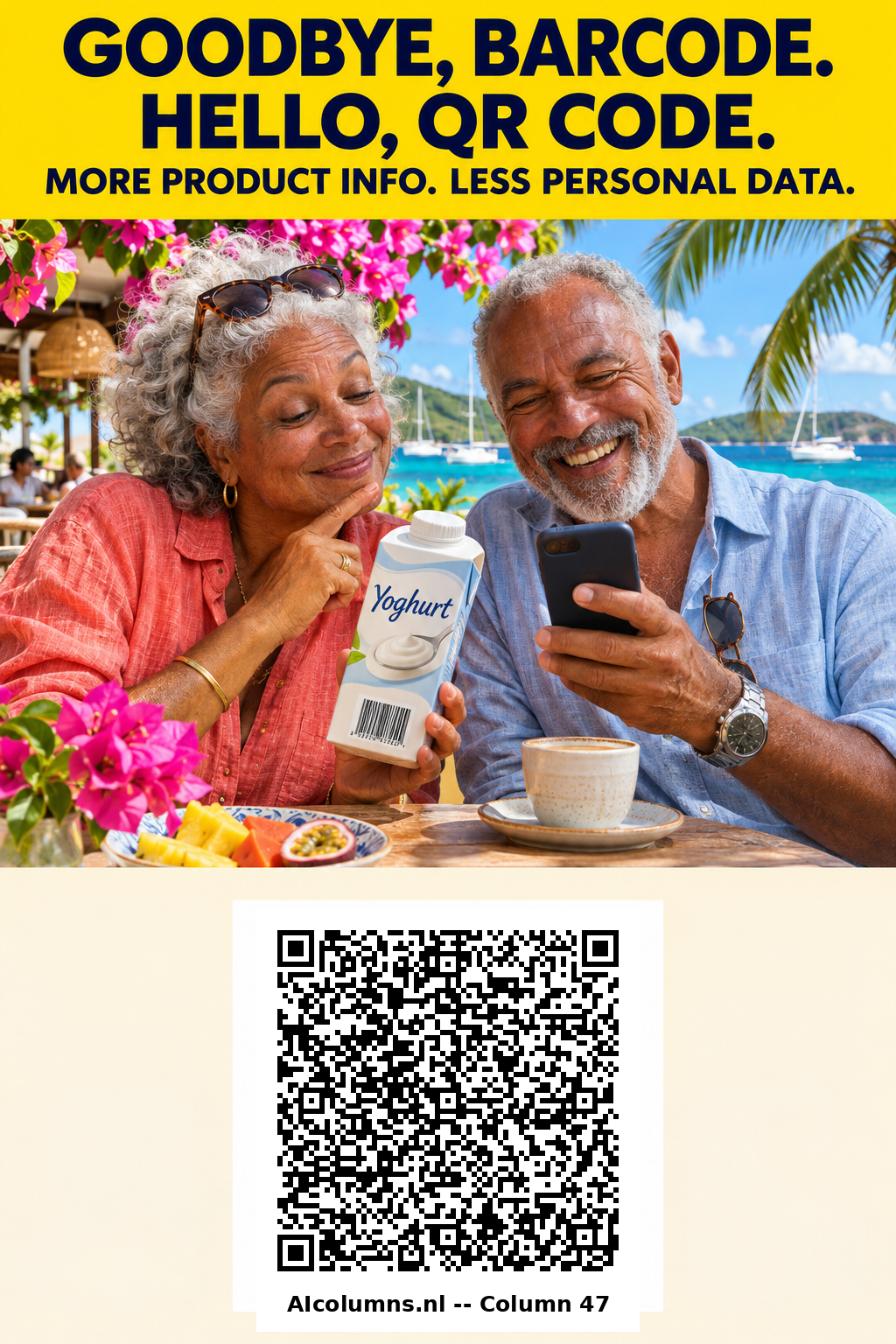
My yoghurt carton is getting a new spokesperson.
For years, the barcode said more or less the same thing: this is who I am. Ask the checkout what I cost.
The QR code has bigger ambitions.
It can tell me where the product comes from, where to find more information and perhaps even which production batch it belongs to.
That sounds useful.
Although I hope my yoghurt will not first ask me to create an account.
No farewell on New Year’s Eve
Perhaps you have read that the barcode will disappear in 2027.
It is not quite that simple.
Under the name Sunrise 2027, standards organisation GS1 is working with the international retail industry on a transition. The goal is for checkout systems to be able to scan and process suitable two-dimensional codes by the end of 2027.
These include QR codes, but also other square codes, such as GS1 DataMatrix.
This is not a general European requirement to remove every traditional barcode by then. Old and new will coexist for some time. The pace will differ between shops, manufacturers and countries. 1
The barcode is not being handed its notice.
It is getting a colleague who can carry more information.
And, strictly speaking, a QR code is itself a type of barcode. We are mainly moving from stripes to squares.
An invention old enough to retire
The barcode’s history begins in the United States. Norman Joseph Woodland and Bernard Silver received a patent for an early version in 1952.
The familiar rectangular retail code came later, partly through the work of IBM engineer George Laurer. On 26 June 1974, a packet of Wrigley’s chewing gum was scanned at a supermarket in Troy, Ohio: the first commercial checkout scan using a UPC code. 23
That was fifty-two years ago.
The QR code is no youngster either. It was developed in 1994 at Japan’s Denso, by a team led by Masahiro Hara. The automotive industry adopted it to track parts and production processes.
QR stands for Quick Response. In 2026, the invention is thirty-two years old. 4
The technology has already grown up.
Now all the checkouts still need to get acquainted.
What else can that little square do?
The ordinary barcode on a supermarket product generally contains a product number. The checkout looks up the price associated with it.
It usually does not say which particular batch of yoghurt you are holding, or when that particular carton reaches its date limit.
A suitable new code can carry a batch number, date or individual serial number alongside the product number.
That creates useful possibilities, if retailers adapt their systems.
For example:
More targeted recalls. A shop can distinguish more precisely which production batch has a problem.
Less food waste. Products can be managed by shelf life and discounted in time.
Extra checks at the checkout. A suitable system can warn about a recalled product or an exceeded use-by date. 5
None of this happens automatically because somebody prints a square on a packet.
The information must be accurate. The software must understand it. The shop must act on it.
A clever code with a foolish system is still just a little square.
Where will we notice the change?
Mainly on packaging in supermarkets and other shops.
Sometimes two codes will temporarily appear side by side. Later, one suitable QR code may serve both the checkout and your phone.
The checkout identifies the product. You can access information about ingredients, origin, use or recycling. That requires a code structured according to the right standards: a random QR link to an advertising page is not automatically a checkout code. 6
You do not need a smartphone for an ordinary purchase. The shop scans the product.
Separately, European legislation is introducing digital product passports. Requirements for certain batteries, including electric vehicle batteries, apply from 18 February 2027. A QR code provides access to the battery passport.
That is a separate development, rather than a general ban on traditional barcodes. 7
My wish is simple: keep important information readable on the packaging too.
Someone checking for peanuts should not first have to charge their phone.
Could this column fit inside one QR code?
A QR code can contain more than a web address.
You can store text directly inside it. A suitable scanner can read that text without an internet connection. How it appears depends on the phone and app.
But there is a limit.
At its largest standard size, a QR code can hold roughly three thousand bytes: precisely, two thousand nine hundred and fifty-three. That maximum uses the lowest level of error correction.
A special character set can accommodate up to four thousand two hundred and ninety-six uppercase letters, digits and certain punctuation marks. Digits alone fit even more efficiently: up to seven thousand and eighty-nine. These are different alternatives, not capacities you can add together. 8
For ordinary writing with lowercase letters and accents, the usable capacity is lower than the often quoted maximum character count might suggest.
A short mini-column can therefore fit directly inside one code.
This full column is too long.
Also, the more information, the denser the pattern. Print quality, size and scanning conditions become more important. 9
Compression can sometimes fit more in, but the reader then needs software that understands it.
For the complete AIcolumns.nl article, a QR code containing a short link remains the most practical choice. Behind that link can sit the full column, translations, pictures and listening options.
The little square contains the door to the library.
Not the entire library.
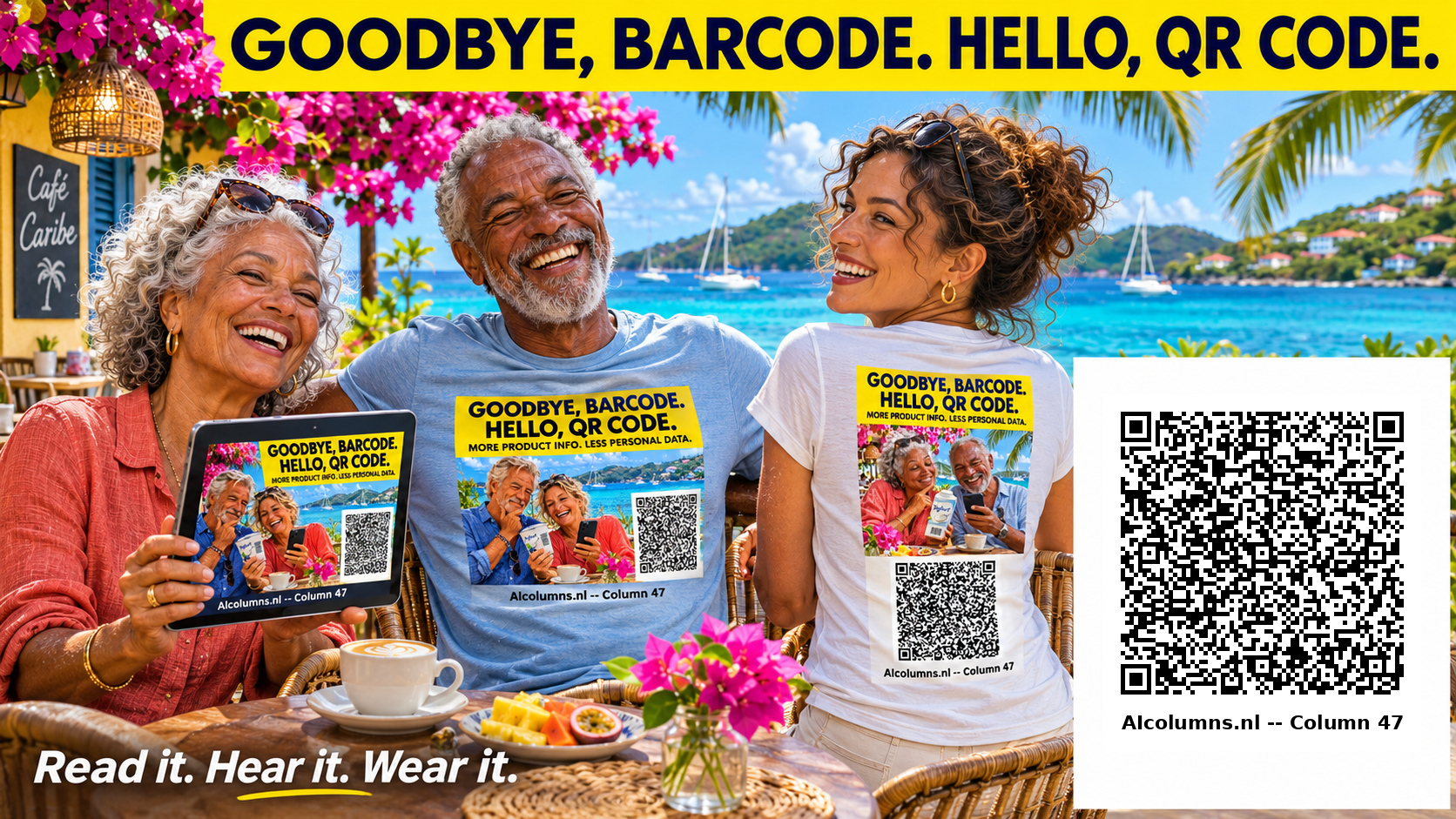
On a T-shirt, however, a short text code can be fun. The message is inside the pattern. Underneath, we print a readable caption: AIcolumns.nl -- Column 47.
That identifies the column even before anyone scans the shirt.
You can make that little square yourself
You do not need to be a manufacturer or programmer to create a QR code.
On Windows, Android, iPhone or Mac, you can use a website such as QRCode Monkey. There is nothing to install. Choose Text for a short message, or URL for a web address alone. 10
On Android, there is also the free Binary Eye app, without advertisements. On Apple devices, the Shortcuts app includes an action to generate a QR code. 1112
Here is a simple way to start:
Open QRCode Monkey and choose Text.
Paste your short message. You can include a web address as part of the text.
Select Create QR Code and download PNG, or SVG for a scalable print file.
Scan the downloaded file and check the contents before printing anything.
For a mini-column, choose a static text code: the message really is inside the square. Not every generator offers the same input options or maximum text length.
A dynamic code usually routes through an intermediary service to a destination that can be changed. That can be useful, but check costs, any scan limits and dependence on the service.
With a static text code, you cannot change the printed message afterwards. It does not depend on a QR subscription. Any included web address naturally still needs a working website.
We tried this ourselves with a short introduction to column 46. My phone read the text, including the blue diamonds and paragraphs. From the note, however, I had to copy the web address into my browser.
So: test first, print afterwards.
Below, you can try it with this column’s English social post. The text is inside the code, including https://va.cr/47. Only opening the complete article requires internet. The sources below include official websites and download links.
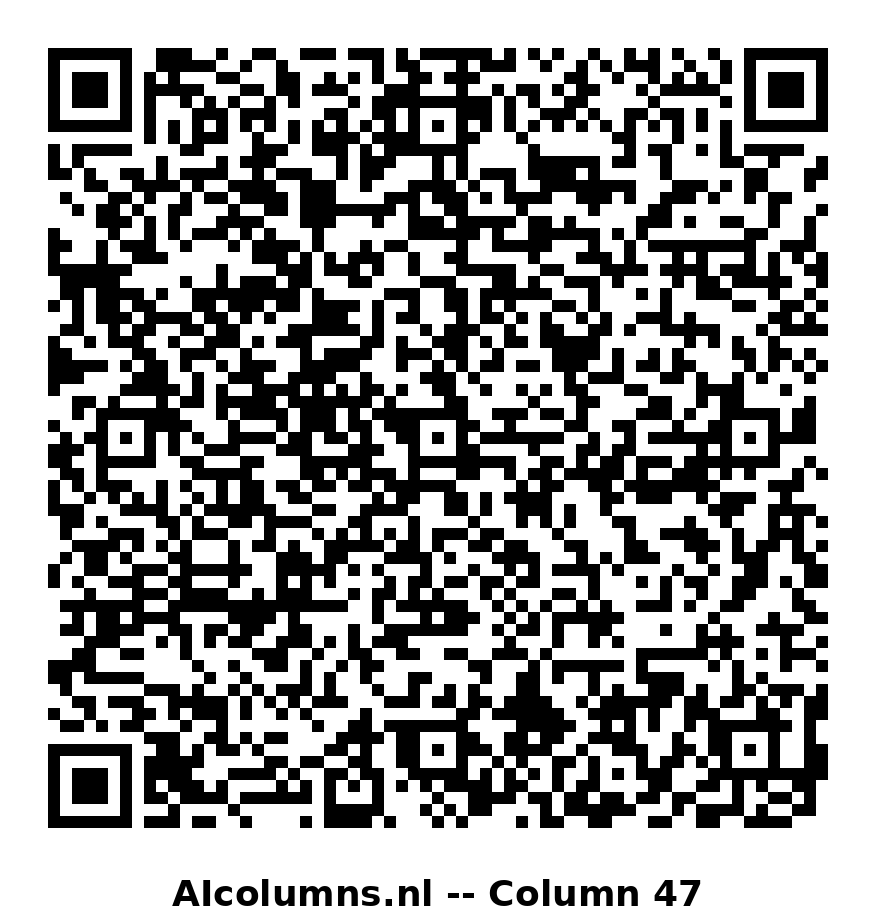
Even a clever little square deserves an understandable caption.
What about my privacy?
A printed QR code has no battery, microphone or transmitter.
It cannot follow you around by itself.
But once you open a website through that code, you are visiting a website. The same privacy questions apply as if you had typed the address yourself. GS1 also points out that the usual website security and privacy policies apply. 5
My concern is therefore mainly about what companies arrange behind that door.
A product page can provide useful information. It can also try to turn somebody seeking information into a registered customer.
If a scan is linked to an account, loyalty card or unique product number, it creates opportunities to learn more about the user.
That is a possible use of the system, rather than an unavoidable property of every QR code.
We need not fear little black squares.
We should remain critical of companies trying to build a fresh customer profile behind every one of them.
Who benefits financially?
Shops and manufacturers have clear business benefits: better stock management, more targeted recalls and more ways to engage with customers. 13
They can measure those returns directly.
For consumers, the benefit depends on the implementation.
Do we get understandable information? Does repair or recycling become easier? Does a warning actually work? Do customers share in the benefits of a more efficient shop?
Or do we mainly get an offer to buy even more yoghurt?
A QR code is not a seal of honesty. A neatly printed square can also lead to inaccurate information.
And scammers can replace codes or direct you to an imitation website. Check the web address before entering details or paying. An unexpected sticker on a parking meter deserves particular attention. 14
My simple wish list:
Product information without compulsory registration.
No location, camera or microphone access without a clear reason.
Important information on the packaging too.
Understandable explanations about data collection.
An ordinary web address as an alternative.
Let the product introduce itself.
Do not interrogate the customer first.
2076: the packaging introduces itself
Now a fictional glimpse fifty years ahead.
It is 2076. My great-granddaughter is in a supermarket, looking at a carton of yoghurt.
She does not have to consciously scan anything.
Her personal assistant recognises the packaging and checks a digitally signed product passport. Perhaps through image recognition, perhaps through a tiny wireless chip: technologies whose predecessors already exist today.
“This fits your dietary preferences,” says the assistant. “And the packaging can go with the ordinary paper recycling.”
“Good,” she says.
“The manufacturer asks whether it may know who is checking.”
“No.”
“Fine. You get the information anyway.”
In this imagined future, her own assistant keeps her preferences. The manufacturer provides product information without receiving her identity in return.
Perhaps QR codes still exist as a simple fallback for devices that cannot talk to one another.
Perhaps their successors can hold much more information directly.
We cannot predict that today. Greater storage is not always the most important improvement anyway.
For me, real progress would mean products becoming easier to identify, while people have less need to identify themselves.
Know more, give less away
The barcode helped the checkout recognise the product.
The QR code can help us understand the product better.
That is a welcome next step.
Provided we keep asking whether the extra information serves us, or mainly the company providing it.
My yoghurt carton is welcome to tell me more about itself.
It does not need to know everything about me in return.
Dag streepjescode. Wat weet dat vierkantje van mij?
Mijn pak yoghurt krijgt een nieuwe woordvoerder.
De streepjescode zei jarenlang ongeveer hetzelfde: dit ben ik. Vraag de kassa maar wat ik kost.
De QR-code heeft grotere ambities.
Die kan mij vertellen waar het product vandaan komt, naar welke informatie ik moet kijken en mogelijk zelfs bij welke productiepartij het hoort.
Dat klinkt handig.
Al hoop ik dat mijn yoghurt niet eerst vraagt of ik een account wil aanmaken.
Geen afscheid op oudejaarsavond
Misschien heb je gelezen dat de streepjescode in 2027 verdwijnt.
Zo eenvoudig ligt het niet.
Onder de naam Sunrise 2027 werkt standaardorganisatie GS1 met de internationale winkelbranche aan een overgang. Het doel is dat kassasystemen tegen eind 2027 ook geschikte tweedimensionale codes kunnen lezen en verwerken.
Daaronder vallen QR-codes, maar ook andere vierkante codes, zoals GS1 DataMatrix.
Het is geen algemene Europese verplichting om dan alle streepjescodes te verwijderen. Oud en nieuw zullen nog een tijd naast elkaar bestaan. De snelheid verschilt per winkel, fabrikant en land. 1
De streepjescode krijgt dus geen ontslagbrief.
Wel een collega die meer informatie kan meenemen.
En voor de nauwkeurigheid: een QR-code is zelf ook een soort barcode. We stappen vooral over van streepjes naar vakjes.
Een uitvinding met pensioenleeftijd
De geschiedenis van de streepjescode begint in de Verenigde Staten. Norman Joseph Woodland en Bernard Silver kregen in 1952 een patent op een vroege uitvoering.
De bekende rechthoekige winkelcode kwam later, mede door het werk van IBM-ingenieur George Laurer. Op 26 juni 1974 werd in een supermarkt in Troy, Ohio, een pakje Wrigley’s kauwgom gescand: de eerste commerciële kassascan met een UPC-code. 23
Dat is inmiddels tweeënvijftig jaar geleden.
De QR-code is ook geen jongeling. Die werd in 1994 ontwikkeld bij het Japanse Denso, door een team onder leiding van Masahiro Hara. De auto-industrie ging hem gebruiken om onderdelen en productieprocessen te volgen.
QR betekent Quick Response: snel antwoord. In 2026 is deze uitvinding tweeëndertig jaar oud. 4
De technologie is dus al volwassen.
Nu moeten de winkelkassa’s nog allemaal kennismaken.
Wat kan dat vierkantje méér?
De gewone streepjescode op een supermarktproduct bevat doorgaans een productnummer. De kassa zoekt daarbij de prijs op.
Hij vertelt meestal niet welke afzonderlijke partij yoghurt je vasthoudt, of wanneer juist dat pak over de datum gaat.
Een geschikte nieuwe code kan naast het productnummer ook een partijcode, houdbaarheidsdatum of individueel serienummer bevatten.
Dat opent nuttige mogelijkheden, als winkels hun systemen daarop aanpassen.
Denk aan:
Gerichtere terugroepacties. Een winkel kan beter onderscheiden welke productiepartij een probleem heeft.
Minder voedselverspilling. Producten kunnen op houdbaarheid worden gevolgd en tijdig worden afgeprijsd.
Extra controle bij de kassa. Een geschikt systeem kan waarschuwen voor een teruggeroepen product of een overschreden uiterste gebruiksdatum. 5
Dat gebeurt niet vanzelf doordat iemand een vierkantje op een verpakking drukt.
De informatie moet kloppen. De software moet ermee werken. De winkel moet er iets mee doen.
Een slimme code met een dom systeem blijft gewoon een vierkantje.
Waar merken wij het?
Vooral op verpakkingen in de supermarkt en bij andere winkels.
Soms staan er tijdelijk twee codes naast elkaar. Later kan één geschikte QR-code zowel de kassa bedienen als jouw telefoon.
De kassa herkent het product. Jij krijgt bijvoorbeeld toegang tot uitleg over ingrediënten, herkomst, gebruik of recycling. Zo’n code moet daarvoor wel volgens de juiste afspraken zijn opgebouwd; een willekeurige QR-link naar een reclamepagina is nog geen kassacode. 6
Je hoeft voor de gewone aankoop geen smartphone te hebben. De winkel scant het product.
Daarnaast komt er Europese wetgeving voor digitale productpaspoorten. Voor bepaalde batterijen, waaronder accu’s voor elektrische voertuigen, gaan vanaf 18 februari 2027 verplichtingen gelden. Een QR-code geeft toegang tot het bijbehorende batterijpaspoort.
Dat is een afzonderlijke ontwikkeling, niet hetzelfde als een algemeen verbod op streepjescodes. 7
Mijn wens daarbij: houd belangrijke informatie ook gewoon leesbaar.
Wie wil weten of ergens pinda’s in zitten, moet daarvoor niet eerst zijn telefoon opladen.
Past deze column in één QR-code?
Een QR-code kan méér bevatten dan een internetadres.
Je kunt er ook rechtstreeks tekst in opslaan. Die tekst kan dan zonder internetverbinding worden gelezen met een geschikte scanner. Hoe de tekst verschijnt, verschilt per telefoon en app.
Maar er zit een grens aan.
Een gewone QR-code kan in zijn grootste uitvoering maximaal ongeveer drieduizend bytes bevatten: nauwkeuriger, tweeduizend negenhonderddrieënvijftig. Dat maximum geldt bij de laagste foutcorrectie.
Met een speciale tekenset passen maximaal vierduizend tweehonderdzesennegentig hoofdletters, cijfers en bepaalde leestekens. Alleen cijfers zijn nog compacter: maximaal zevenduizend negenentachtig. Dat zijn verschillende mogelijkheden, geen hoeveelheden die je bij elkaar kunt optellen. 8
Voor gewone tekst met kleine letters en accenten ligt de bruikbare hoeveelheid lager dan het vaak genoemde maximumaantal tekens doet vermoeden.
Een korte minicolumn kan dus rechtstreeks in één code passen.
Deze volledige column is daarvoor te lang.
Bovendien: hoe meer informatie, hoe dichter het patroon. Dan worden drukkwaliteit, formaat en goed kunnen scannen belangrijker. 9
Met compressie kun je soms meer kwijt, maar dan heeft de lezer ook software nodig die dat begrijpt.
Voor de volledige AIcolumns.nl-column blijft een QR-code met een korte link daarom het handigst. Achter die link kunnen de hele column, vertalingen, afbeeldingen en luistermogelijkheden staan.
Het vierkantje bevat dan de deur naar de bibliotheek.
Niet de hele bibliotheek.
Maar op een T-shirt kan juist een korte tekstcode leuk zijn. De boodschap zit in het patroon. Daaronder zetten we leesbaar: AIcolumns.nl -- Column 47.
Zo weet je ook zonder te scannen welke column bij het T-shirt hoort.
Dat vierkantje kun je ook zelf maken
Je hoeft geen fabrikant of programmeur te zijn om een QR-code te maken.
Op Windows, Android, iPhone of Mac kun je daarvoor een website zoals QRCode Monkey gebruiken. Installeren is niet nodig. Kies Text voor een korte boodschap, of URL voor alleen een internetadres. 10
Op Android bestaat daarnaast de gratis app Binary Eye, zonder advertenties. Op Apple-apparaten kan het met de app Opdrachten, in het Engels Shortcuts, die een actie heeft om een QR-code te genereren. 1112
Praktisch werkt het zo:
Open QRCode Monkey en kies Text.
Plak je korte tekst. Een webadres mag er gewoon als tekst bij staan.
Kies Create QR Code en download PNG, of SVG voor een schaalbaar drukbestand.
Scan het gedownloade bestand en controleer de tekst voordat je iets laat drukken.
Gebruik voor een mini-column een statische tekstcode: dan staat de boodschap werkelijk in het vierkantje. Niet iedere generator biedt dezelfde invoer of dezelfde maximale tekstlengte.
Een dynamische code verwijst doorgaans via een tussendienst naar een wijzigbare bestemming. Dat kan handig zijn, maar controleer kosten, eventuele scanlimieten en afhankelijkheid van die dienst.
Bij een statische tekstcode kun je de gedrukte boodschap achteraf niet aanpassen. Hij is niet afhankelijk van een QR-abonnement. Een opgenomen webadres heeft natuurlijk wel een werkende website nodig.
Dat hebben we zelf geprobeerd met een korte introductie van column 46. Mijn telefoon las de tekst uit, inclusief de blauwe ruitjes en alinea’s. Het webadres moest ik vanuit de notitie wel naar mijn browser kopiëren.
Dus: eerst testen, dan drukken.
Hieronder kun je het zelf proberen met de Engelse social post van deze column. De tekst staat in de code, inclusief https://va.cr/47. Alleen om de volledige column te openen heb je internet nodig. De bronvermelding onderaan bevat de officiële websites en downloadlinks.
Zelfs een slim vierkantje mag een begrijpelijk onderschrift hebben.
En mijn privacy?
Een gedrukte QR-code heeft geen batterij, microfoon of zendertje.
Hij kan je niet uit zichzelf volgen.
Maar zodra je via die code een website opent, bezoek je gewoon een website. Daar gelden dezelfde privacyvragen als wanneer je zelf het adres had ingetypt. Ook GS1 wijst erop dat de gewone beveiligings- en privacyregels voor websites hier van toepassing zijn. 5
Mijn zorg zit daarom vooral in wat bedrijven achter die deur organiseren.
Een productpagina kan nuttige informatie geven. Ze kan ook proberen van een informatiezoeker een geregistreerde klant te maken.
Als een scan wordt gekoppeld aan een account, klantenkaart of uniek productnummer, ontstaat de mogelijkheid om meer over de gebruiker te leren.
Dat is een mogelijk gebruik van het systeem, geen onvermijdelijke eigenschap van iedere QR-code.
We hoeven dus niet bang te zijn voor zwarte vakjes.
We moeten kritisch blijven op bedrijven die achter ieder vakje een nieuw klantprofiel willen bouwen.
Wie verdient eraan?
Winkels en fabrikanten hebben duidelijke zakelijke voordelen: beter voorraadbeheer, gerichtere terugroepacties en meer mogelijkheden voor contact met klanten. 13
Zij kunnen de opbrengsten daarvan rechtstreeks meten.
Voor consumenten hangt de winst af van de uitvoering.
Krijgen we begrijpelijke informatie? Kunnen we iets makkelijker repareren of recyclen? Werkt een waarschuwing echt? Komt een efficiëntere winkel ook de klant ten goede?
Of krijgen we vooral een aanbieding voor nóg meer yoghurt?
Een QR-code is geen keurmerk voor eerlijkheid. Ook onjuiste informatie kan achter een keurig gedrukt vierkantje staan.
En oplichters kunnen codes vervangen of naar een nagemaakte website laten verwijzen. Controleer daarom het webadres voordat je gegevens invult of betaalt. Vooral een onverwachte sticker op een parkeerautomaat verdient aandacht. 14
Mijn eenvoudige wensenlijst:
Productinformatie zonder verplichte registratie.
Geen locatie-, camera- of microfoontoegang zonder duidelijke noodzaak.
Belangrijke informatie ook op de verpakking.
Begrijpelijke uitleg over gegevensverzameling.
Een gewoon webadres als alternatief.
Laat het product zich voorstellen.
Niet eerst de klant ondervragen.
2076: de verpakking stelt zichzelf voor
Nu een fictief kijkje, vijftig jaar vooruit.
Het is 2076. Mijn achterkleindochter staat in de supermarkt en kijkt naar een pak yoghurt.
Ze hoeft niets meer bewust te scannen.
Haar persoonlijke assistent herkent de verpakking en controleert een digitaal ondertekend productpaspoort. Misschien via beeldherkenning, misschien via een kleine draadloze chip: technieken waarvan de voorlopers nu al bestaan.
“Deze past bij je voedingsvoorkeuren”, zegt de assistent. “En de verpakking kan bij het gewone papier.”
“Mooi”, zegt zij.
“De fabrikant vraagt of hij mag weten wie dit controleert.”
“Nee.”
“Prima. Je krijgt de informatie toch.”
In dit toekomstbeeld bewaart haar eigen assistent haar voorkeuren. De fabrikant levert productinformatie zonder daarvoor haar identiteit terug te krijgen.
Misschien bestaan QR-codes dan nog, als eenvoudige reserve voor apparaten die niet met elkaar kunnen praten.
Misschien kunnen opvolgers veel meer informatie rechtstreeks bevatten.
Dat kunnen we nu niet voorspellen. Meer opslag is bovendien niet altijd de belangrijkste verbetering.
Voor mij zou de echte vooruitgang zijn dat producten steeds beter herkenbaar worden, terwijl mensen minder herkenbaar hóéven te zijn.
Meer weten, minder prijsgeven
De streepjescode hielp de kassa het product te herkennen.
De QR-code kan ons helpen het product beter te begrijpen.
Dat is een mooie volgende stap.
Zolang we blijven vragen of de extra informatie ons dient, of vooral degene die haar aanbiedt.
Mijn pak yoghurt mag best meer over zichzelf vertellen.
Het hoeft daarvoor niet alles over mij te weten.
Read It. Hear It. Wear It.
Two English designs in our Caribbean style. Open an image to view or download the full design.