Friends Must Be Able to Tell You the Truth
Personal column 54 · Friday, 13 November 2026
Ad Latjes, a friend of Israel
In 1975, Clasien and I walked into the Old City of Jerusalem at dusk. I remember looking down at the stones in the street and thinking of all the people who had walked over them before us. At the Western Wall, I thought about what it must have meant for generations of Jewish people to long for a city they might never see.
Fifteen years later, when I wrote about that evening in my autobiography, it still gave me goosebumps. I had first visited Israel in January 1971. I spent six weeks travelling around the country, visiting kibbutzim where Dutch students might go as volunteers. By the time I came back with Clasien, Israel had already become a place I cared about. Jerusalem made that feeling stronger. My autobiography
I thought about that evening when I read that thirteen American state attorneys general had written to the Dutch ambassador in Washington. They wanted the Netherlands to withdraw measures targeting trade with Israeli settlements in occupied territory. They accused the Netherlands of siding with the objectives of Hamas and Hezbollah.
I found that accusation hard to swallow. The Netherlands treats both organisations as terrorist organisations. At EU level, Hamas is listed in its entirety and Hezbollah’s military wing is listed. Those designations predate 7 October 2023. I could find no reliable polling from before that date showing what most Dutch or European citizens thought of both groups. I can speak for myself. I condemn the murder and abduction of civilians by Hamas on 7 October. I also expect my country to speak up for Palestinian civilians in Gaza. I would be ashamed if the Netherlands felt it had to choose which civilians it was allowed to care about. EU terrorist list
What do we do while the court is still hearing the case?
The word genocide carries particular weight when the country accused is Israel. I think of the Holocaust and of what the survival of the Jewish people means. That history is one reason I understand the importance of Israel’s security. It is also why I wish the Israeli government would be especially careful about any policy that puts the survival of Palestinians in Gaza at risk. The decisions I am questioning belong to the Israeli government and the authorities carrying them out.
The Genocide Convention gives the word a precise meaning. It covers acts such as killing members of a national, ethnic, racial or religious group, or deliberately imposing conditions of life that can bring about its physical destruction, when those acts are committed with the intent to destroy the group in whole or in part. That intent is central to the legal question. Genocide Convention
Amnesty International, the Israeli human rights organisation B’Tselem and an independent UN commission of inquiry have concluded that Israel has committed genocide in Gaza. The Israeli government rejects the allegation. The International Court of Justice has ordered provisional measures in South Africa’s case against Israel. Those orders address urgent protection while the case proceeds. The Court has yet to deliver a final judgment on the allegation. Amnesty International · B’Tselem · UN commission report · ICJ case docket
I want the Court to examine the evidence carefully. I also want to know what governments are prepared to do while it does. The duty to prevent genocide arises when a state knows, or should know, that there is a serious risk. What a government can reasonably do depends in part on the influence it has. If countries with influence wait for a final judgment before using it, the people the treaty was written to protect may already be dead. And the next government accused of similar acts will have seen how long it can count on its friends to wait. ICJ judgment on the duty to prevent genocide, paragraph 431
What will make Israelis safer in the long run?
If I lived in Israel, I would want my government to protect my family from another 7 October. I would also want to know whether the way it was fighting Hamas made another attack less likely five or ten years from now.
Israel has considerable technical expertise. I would like to see more of that ingenuity devoted to protecting civilians. How can Israel restrict Hamas’s access to weapons while keeping food, water and medicine moving into Gaza? How can hospitals, aid workers and families keep communicating? If an ambulance crew loses contact with the hospital, or a parent cannot find out where a child has been taken, those are real consequences of decisions about communications. They should weigh heavily in those decisions.
In January 2025, Reuters reported that US intelligence had estimated that Hamas recruited between 10,000 and 15,000 members after the war began, roughly as many as it was estimated to have lost over the same period. That estimate cannot tell us why each person joined. It does make me ask what Israel achieves in the long run if Hamas can replace so many of the people it loses. I worry about what Hamas can do with the anger of a young person whose family has been killed. An Israeli government thinking about the safety of the next generation should worry about that too. Reuters
What are friends prepared to do?
That brings me back to the American letter. The thirteen state attorneys general wanted the Netherlands to withdraw its settlement-related measures. At the federal level, President Trump has proposed ending US military aid to Israel from 1 January 2027, while allowing weapons sales to continue. The state officials and the federal government have different powers, and the aid proposal still has to be put into effect. The two positions can coexist. What I want to know is why Dutch pressure on Israeli policy is treated as a betrayal when Washington itself is debating the terms on which it supports Israel.
I have three questions for the Dutch and American governments. What conditions do they place on weapons they authorise for Israel? What will they do if Israeli authorities block humanitarian aid to Palestinian civilians in Gaza? And what consequences will follow if the Israeli government ignores their warnings? I would like both governments to answer publicly. They should be able to say when they would suspend an arms licence and what they expect Israel to do to allow aid agencies and independent investigators to work.
After 7 October, many people around the world sympathised with Israelis who had lost relatives or were waiting for hostages to come home. That sympathy mattered. I worry that the Israeli government underestimates how much of it can be lost. As long as the genocide allegations remain and Palestinian civilians in Gaza face grave danger, I expect protests against Israeli government policy to continue. Over time, public anger can change what elected governments are willing to defend and where they are willing to cooperate. The prospect of Israel being treated as a pariah worries me because ordinary Israelis will live with the consequences long after the people making today’s decisions have left office.
I still think of that walk into Jerusalem with Clasien. I want Israelis to be able to walk home in safety, and Palestinian families in Gaza to have a home they can return to. That is what I want the Dutch and American governments to have in mind when they speak to Israel. If Israel values having friends in the world, its government must accept that those friends will sometimes have hard truths to tell. A friend should be willing to say them while there is still time to make a difference.
Lees deze column in het Nederlands +
Vrienden moeten je de waarheid kunnen vertellen
Persoonlijke column 54 · vrijdag 13 november 2026
Ad Latjes, een vriend van Israël
In 1975 liepen Clasien en ik bij het vallen van de avond de Oude Stad van Jeruzalem binnen. Ik weet nog dat ik naar de stenen in de straat keek en dacht aan alle mensen die er vóór ons overheen waren gelopen. Bij de Westelijke Muur dacht ik aan wat het voor generaties Joden moet hebben betekend om te verlangen naar een stad die ze misschien nooit zouden zien.
Toen ik vijftien jaar later in mijn autobiografie over die avond schreef, kreeg ik er nog steeds kippenvel van. Ik was in januari 1971 voor het eerst in Israël geweest. Zes weken trok ik door het land en bezocht ik kibboetsen waar Nederlandse studenten vrijwilligerswerk zouden kunnen doen. Toen ik met Clasien terugkwam, was Israël al een land waar ik om gaf. Jeruzalem maakte dat gevoel sterker. Mijn autobiografie
Ik moest aan die avond denken toen ik las dat dertien procureurs-generaal van Amerikaanse staten een brief hadden geschreven aan de Nederlandse ambassadeur in Washington. Ze wilden dat Nederland zijn maatregelen tegen handel met Israëlische nederzettingen in bezet gebied introk. Ze verweten Nederland dat het zich achter de doelstellingen van Hamas en Hezbollah schaarde.
Die beschuldiging schoot me in het verkeerde keelgat. Nederland beschouwt beide organisaties als terroristische organisaties. De Europese Unie heeft Hamas in zijn geheel en de militaire vleugel van Hezbollah op haar terrorismelijst gezet. Dat gebeurde al vóór 7 oktober 2023. Ik heb geen betrouwbaar opinieonderzoek van vóór die datum kunnen vinden waaruit blijkt wat de meeste Nederlanders of Europeanen van beide organisaties vonden. Ik kan wel voor mezelf spreken. Ik veroordeel de moord op en ontvoering van burgers door Hamas op 7 oktober. Ik verwacht ook dat mijn land opkomt voor Palestijnse burgers in Gaza. Ik zou me schamen als Nederland dacht te moeten kiezen om welke burgers het zich mag bekommeren. EU-terrorismelijst
Wat doen we zolang het Hof de zaak behandelt?
Het woord genocide weegt zwaar, zeker als Israël ervan wordt beschuldigd. Ik denk aan de Holocaust en aan wat het voortbestaan van het Joodse volk betekent. Die geschiedenis helpt mij begrijpen hoe belangrijk de veiligheid van Israël is. Juist daarom zou ik willen dat de Israëlische regering bijzonder voorzichtig is met elk beleid dat het voortbestaan van Palestijnen in Gaza in gevaar brengt. Ik stel vragen bij de beslissingen van de Israëlische regering en van de autoriteiten die ze uitvoeren.
Het Genocideverdrag geeft het woord een precieze betekenis. Het gaat om handelingen zoals het doden van leden van een nationale, etnische, raciale of religieuze groep of het opzettelijk opleggen van levensomstandigheden die tot de fysieke vernietiging van die groep kunnen leiden. Zulke handelingen vallen onder het verdrag als ze worden gepleegd met de bedoeling de groep geheel of gedeeltelijk te vernietigen. Die bedoeling staat centraal in de juridische beoordeling. Genocideverdrag
Amnesty International, de Israëlische mensenrechtenorganisatie B’Tselem en een onafhankelijke VN-onderzoekscommissie zijn tot de conclusie gekomen dat Israël genocide heeft gepleegd in Gaza. De Israëlische regering verwerpt de beschuldiging. Het Internationaal Gerechtshof heeft voorlopige maatregelen bevolen in de zaak die Zuid-Afrika tegen Israël heeft aangespannen. Die maatregelen moeten bescherming bieden terwijl de zaak loopt. Het Hof heeft nog geen einduitspraak gedaan over de beschuldiging. Amnesty International · B’Tselem · VN-onderzoeksrapport · Zaak bij het Internationaal Gerechtshof
Ik wil dat het Hof het bewijs zorgvuldig onderzoekt. Intussen wil ik weten wat regeringen bereid zijn te doen. De plicht om genocide te voorkomen ontstaat zodra een staat weet of had moeten weten dat er een ernstig risico bestaat. Wat een regering redelijkerwijs kan doen, hangt mede af van de invloed die zij heeft. Als landen met invloed wachten op een einduitspraak voor ze die invloed gebruiken, kunnen de mensen voor wie het verdrag is geschreven al dood zijn. En de volgende regering die van zulke daden wordt beschuldigd, heeft dan gezien hoelang haar vrienden bereid zijn te wachten.
Wat maakt Israëliërs op lange termijn veiliger?
Als ik in Israël woonde, zou ik willen dat mijn regering mijn gezin beschermt tegen een nieuwe 7 oktober. Ik zou ook willen weten of de manier waarop zij Hamas bestrijdt de kans op een nieuwe aanslag over vijf of tien jaar kleiner maakt.
Israël heeft veel technische kennis. Ik zou graag zien dat het meer van die kennis inzet om burgers te beschermen. Hoe kan Israël Hamas de toegang tot wapens bemoeilijken en tegelijk zorgen dat voedsel, water en medicijnen Gaza blijven bereiken? Hoe kunnen ziekenhuizen, hulpverleners en families met elkaar in contact blijven? Als een ambulanceploeg het ziekenhuis niet meer kan bereiken, of een ouder niet te weten komt waar een kind naartoe is gebracht, zijn dat concrete gevolgen van beslissingen over communicatie. Die gevolgen moeten zwaar wegen.
Reuters meldde in januari 2025 dat Amerikaanse inlichtingendiensten schatten dat Hamas sinds het begin van de oorlog tussen de 10.000 en 15.000 leden had geworven. Dat waren er ongeveer evenveel als de organisatie in diezelfde periode naar schatting had verloren. Uit die schatting blijkt niet waarom iemand zich aansloot. Ze doet mij wel afvragen wat Israël op lange termijn bereikt als Hamas zoveel mensen kan vervangen. Ik maak me zorgen over wat Hamas kan doen met de woede van een jongere wiens familie is gedood. Een Israëlische regering die nadenkt over de veiligheid van de volgende generatie zou zich daar ook zorgen over moeten maken. Reuters
Wat zijn vrienden bereid te doen?
Dat brengt me terug bij de Amerikaanse brief. De dertien procureurs-generaal wilden dat Nederland zijn maatregelen tegen handel met de nederzettingen introk. Op federaal niveau heeft president Trump voorgesteld de Amerikaanse militaire hulp aan Israël per 1 januari 2027 te beëindigen en wapenverkoop mogelijk te houden. De procureurs-generaal en de federale regering hebben verschillende bevoegdheden. Het voorstel over de hulp moet nog worden uitgevoerd. Die twee posities kunnen naast elkaar bestaan. Wat ik wil weten, is waarom Nederlandse druk op het Israëlische beleid als verraad wordt uitgelegd terwijl Washington zelf bespreekt onder welke voorwaarden het Israël steunt.
Ik heb drie vragen voor de Nederlandse en Amerikaanse regering. Welke voorwaarden stellen zij aan de wapenleveringen aan Israël waarvoor zij toestemming geven? Wat doen zij als de Israëlische autoriteiten humanitaire hulp aan Palestijnse burgers in Gaza tegenhouden? En welke gevolgen verbinden zij eraan als de Israëlische regering hun waarschuwingen naast zich neerlegt? Ik zou graag zien dat beide regeringen daar publiekelijk antwoord op geven. Ze zouden moeten kunnen zeggen wanneer zij een wapenvergunning opschorten en wat zij van Israël verwachten om hulpverleners en onafhankelijke onderzoekers hun werk te laten doen.
Na 7 oktober leefden wereldwijd veel mensen mee met Israëliërs die familieleden hadden verloren of wachtten op de thuiskomst van gijzelaars. Dat medeleven deed ertoe. Ik vrees dat de Israëlische regering onderschat hoeveel ervan verloren kan gaan. Zolang de beschuldigingen van genocide blijven en Palestijnse burgers in Gaza ernstig gevaar lopen, verwacht ik dat de protesten tegen het Israëlische regeringsbeleid aanhouden. Na verloop van tijd kan publieke woede veranderen wat gekozen regeringen bereid zijn te verdedigen en op welke terreinen ze willen samenwerken. Het vooruitzicht dat Israël als een paria wordt behandeld baart mij zorgen, omdat gewone Israëliërs de gevolgen zullen dragen lang nadat de mensen die nu de beslissingen nemen uit functie zijn.
Ik denk nog steeds aan die wandeling met Clasien, de Oude Stad van Jeruzalem in. Ik wil dat Israëliërs veilig naar huis kunnen lopen en dat Palestijnse gezinnen in Gaza een huis hebben om naar terug te keren. Ik hoop dat de Nederlandse en Amerikaanse regering daaraan denken wanneer ze met Israël spreken. Als Israël waarde hecht aan vrienden in de wereld, moet zijn regering accepteren dat juist die vrienden soms harde waarheden te vertellen hebben. Een vriend moet ze durven uitspreken zolang het nog verschil kan maken.
Free full-size images
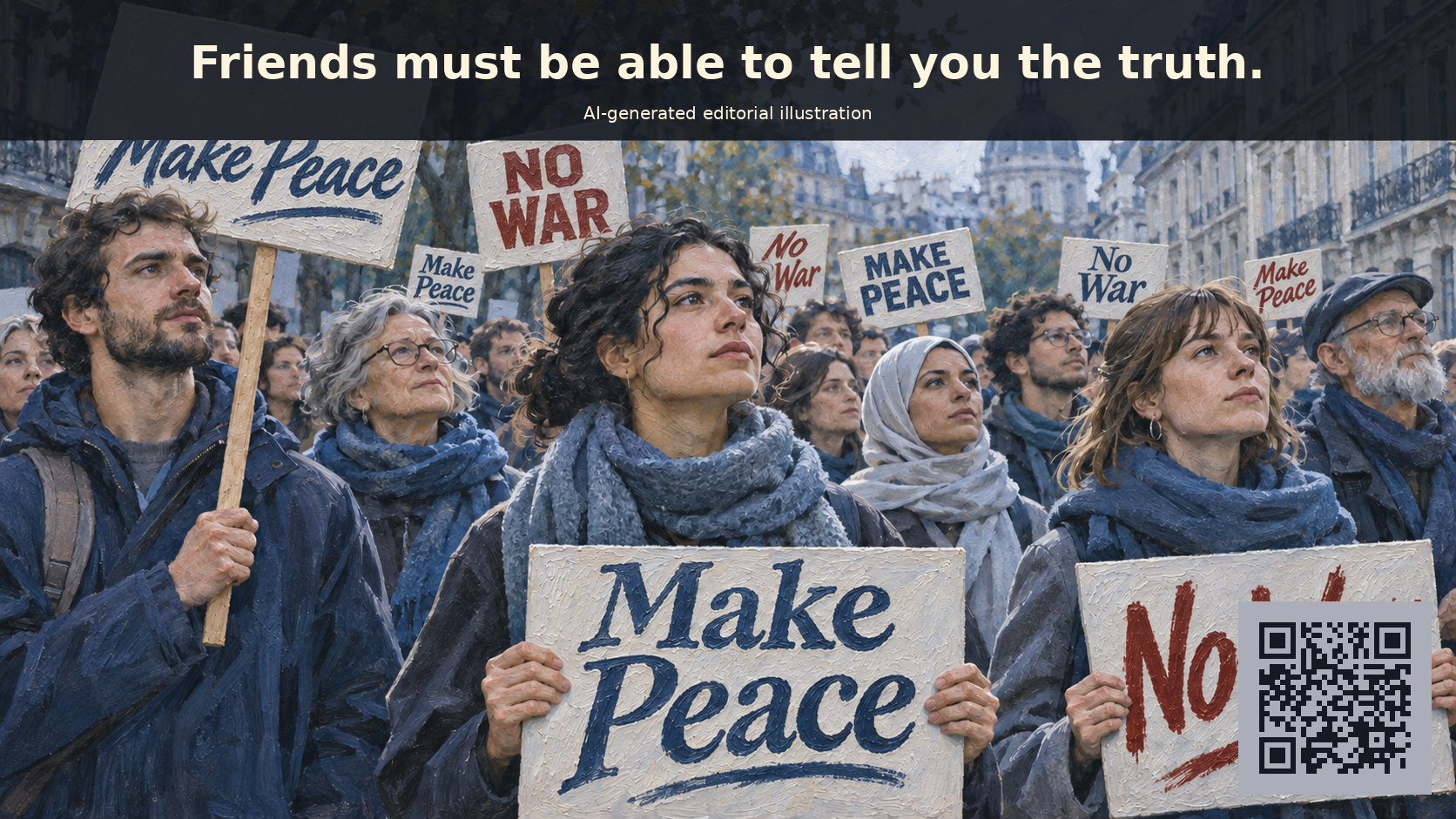
Friends must be able to tell you the truth. · AI-generated editorial illustration
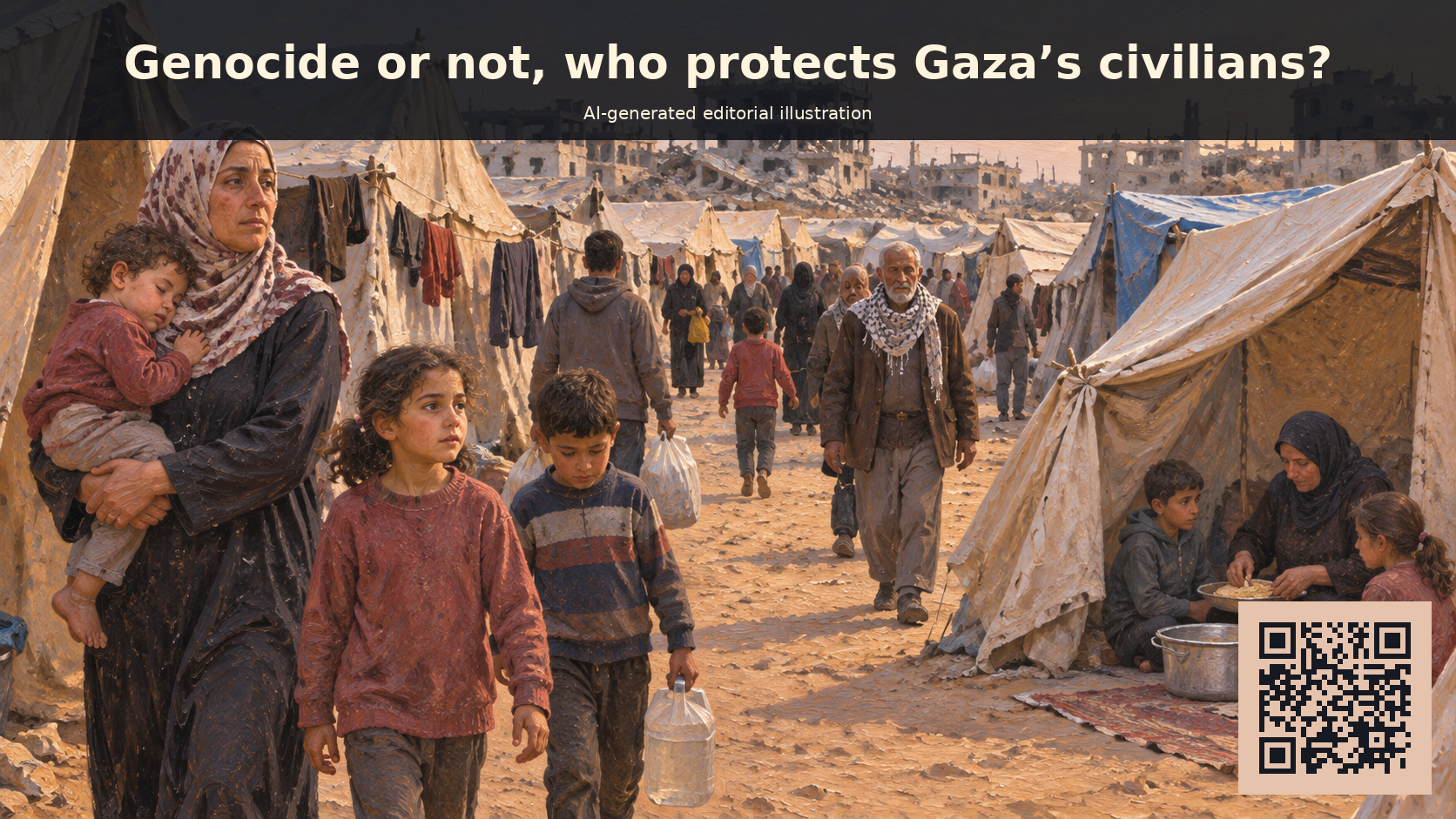
Genocide or not, who protects Gaza’s civilians? · AI-generated editorial illustration

Jerusalem stays with me. · AI-generated editorial illustration