Can Technology Improve Food Security for All?
October 19, 2026
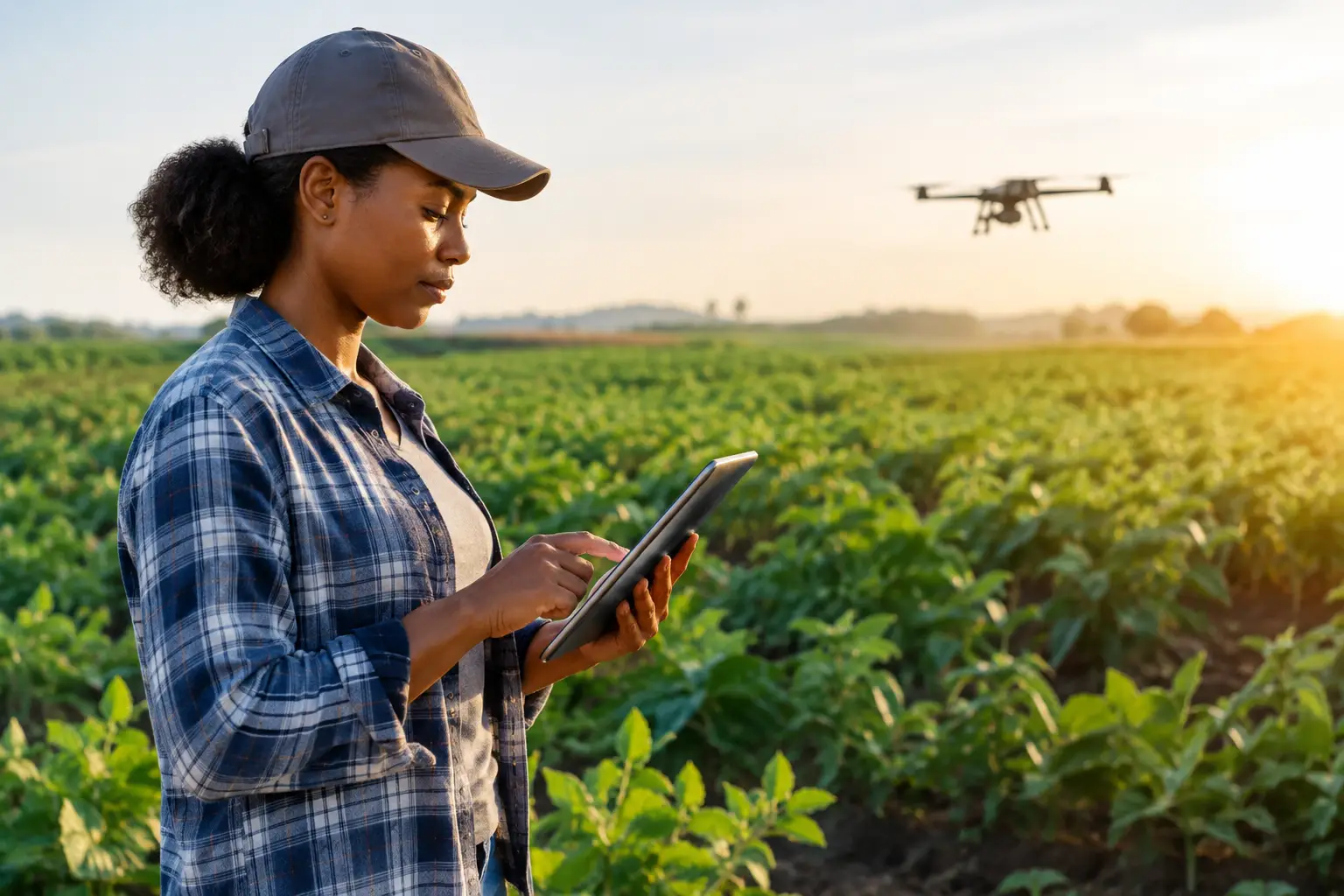
The strange thing about food shortages is that they can occur while supermarkets are throwing out edible strawberries because one is slightly too small for a plastic box. Meanwhile, a farmer a few hundred miles away may be guessing whether rain will arrive before the seedlings give up. Can technology improve food security? Certainly. But the more honest answer is: technology can improve parts of the food system, provided we do not mistake a clever app for a food policy.
Food security is not simply about producing more calories. The world already produces an impressive amount of food, and still millions of people cannot reliably afford, access, store, or safely prepare it. A drone cannot solve an empty wallet. Artificial intelligence cannot negotiate peace in a war zone. And a sensor in a field is not much use if the farmer cannot get a fair price for the crop.
That does not make technology irrelevant. It makes the question more interesting.
Food Security Is a Chain, Not a Harvest
When people discuss hunger, the conversation often jumps straight to yield: how do we grow more wheat, rice, corn, or vegetables? Yield matters, especially as droughts, floods, heat waves, soil exhaustion, and water scarcity become less theoretical. But food security has several links: production, storage, transport, markets, affordability, nutrition, and resilience when something goes badly wrong.
A country can have productive farms and still have hungry households. A city can have well-stocked stores and still leave low-income families choosing between groceries and rent. A region can harvest enough grain, then lose much of it to pests, poor storage, broken roads, or a price collapse that makes farming financially impossible next season.
Technology can strengthen each link. It can also weaken them if it concentrates control in a handful of companies, governments, or data owners. That is the part that tends to disappear from glossy presentations featuring cheerful drones hovering over impossibly green fields.
Where Technology Can Make a Real Difference
The least glamorous improvements are often the most valuable. Better storage, reliable refrigeration, efficient irrigation, and practical weather alerts may do more for food security than a robot that can identify a cucumber with the confidence of a tax inspector.
Better decisions before the crop fails
Satellite imagery, local weather data, and soil sensors can help farmers decide when to plant, irrigate, fertilize, or protect a crop. Used well, these tools reduce waste and limit unnecessary chemical use. They can also provide an earlier warning of drought, disease, or pest outbreaks.
For a large commercial farm, that may mean optimizing thousands of acres. For a smallholder farmer, a basic text message in a local language can be more meaningful: heavy rain is likely tomorrow, delay planting; a fungal disease has been reported nearby; market prices in the next town are higher this week.
The distinction matters. A solution designed for a Dutch greenhouse full of sensors is not automatically useful in a rural area with unreliable electricity and expensive mobile data. Technology works best when it begins with the user’s actual problem, not with an investor’s preferred gadget.
Less food lost after harvest
A shocking share of food never reaches a plate. In lower-income regions, losses often happen after harvest because crops spoil before they can be stored or sold. In wealthier countries, waste moves later in the chain: retailers reject produce, restaurants overorder, and households discover a suspicious bag of spinach at the back of the refrigerator.
Simple technology can help. Airtight grain storage, solar-powered cold rooms, temperature monitoring in trucks, and better inventory systems can extend shelf life. Digital marketplaces can connect farmers to buyers before a harvest sits rotting beside a road.
None of this is futuristic. That is exactly why it deserves attention. Hunger has never required a science-fiction solution. It has often required functioning infrastructure and fewer absurd rules about the acceptable curvature of a carrot.
Smarter use of water and inputs
Agriculture uses enormous amounts of water, and in many places it uses it poorly. Precision irrigation can deliver water where and when a plant needs it instead of soaking an entire field because that is how it has always been done. Sensors and data models can help reduce fertilizer runoff while maintaining yields.
This has a double benefit. Farmers may save money, and ecosystems take less punishment. But there is a caveat: precision agriculture can be expensive. If public policy treats it only as a premium tool for large farms, it may widen the gap between those who can invest and those who are already operating on wafer-thin margins.
Faster response when crises hit
Food insecurity often arrives through a series of bad events rather than one dramatic catastrophe. A drought reduces harvests. Prices rise. A conflict disrupts transport. Flooding damages a port. Suddenly, the weekly grocery bill has become a geopolitical briefing.
Data systems can map crop conditions, track market prices, and flag supply disruptions earlier. Governments and aid organizations can use that information to position food stocks, support cash transfers, or prevent panic buying before a local crisis becomes a regional emergency.
Early warning is valuable only if somebody is prepared to act on it. A dashboard that predicts hunger, followed by three months of meetings about the dashboard, is not a humanitarian achievement.
The Hidden Question: Who Owns the System?
The optimistic version of agricultural technology imagines empowered farmers with better information. The less optimistic version imagines farmers renting access to seeds, software, machinery, and marketplaces controlled by a few global firms. Both versions are possible.
Data is central here. A farm generates useful information about soils, yields, water use, planting patterns, and local weather. That information can help farmers, researchers, insurers, and public planners. It can also become a bargaining chip held by a platform that knows more about a farmer’s business than the farmer does.
If digital tools are to improve food security fairly, farmers need clear rights over their data, understandable contracts, and the ability to switch providers. Publicly funded agricultural data should not quietly become private property through the back door.
The same applies to artificial intelligence. AI can analyze images of diseased plants, estimate yields, and improve logistics. It can be useful. But it is not neutral simply because it uses math. A model trained on farms in one climate may give poor advice in another. An automated credit score can exclude farmers who lack formal records, even when they have been growing food successfully for decades.
Can Technology Improve Food Security Without Making It More Fragile?
This is the test. Efficiency is helpful, until it removes every backup option. A highly optimized food system can become brittle if it depends on a few seed varieties, one software provider, one shipping route, or electricity that fails during a heat wave.
Resilience requires some redundancy. It means diverse crops, local knowledge, seed banks, functioning regional storage, and supply chains that do not collapse because one container ship is delayed. Technology should support that diversity, not flatten it into one global template.
There is also a cultural point that engineers sometimes learn late: farmers are not empty hard drives waiting for an update. They already possess detailed knowledge of soil, seasons, livestock, pests, and risk. The best systems combine that experience with better forecasts and tools. The worst systems arrive with a manual, a subscription fee, and the faint smell of arrogance.
The Public Role Cannot Be Outsourced
Private innovation has a role, but food security is too important to leave entirely to market logic. Governments need to invest in rural connectivity, agricultural research, water management, roads, cold chains, and education. They also need competition rules that stop essential food infrastructure from becoming a toll booth.
For consumers, the issue is closer than it appears. The price of bread, the reliability of fresh produce, and the survival of family farms are not separate topics. They are parts of the same system. Cheap food at the register can conceal expensive damage elsewhere: depleted soil, underpaid labor, wasted water, and farmers who cannot afford to continue.
Technology can help reveal those costs and reduce them. But it cannot decide what kind of food system we want. That remains stubbornly human work.
The useful question, then, is not whether we should choose technology or tradition. We need both, plus the political nerve to ask who benefits, who pays, and who is left holding an empty basket when the system glitches. If a new tool helps a farmer grow more with less, keeps food from spoiling, and makes a family’s next meal more secure, it deserves a place at the table. Just do not let it sit at the head of it.