How Misinformation Changes Public Opinion
October 15, 2026
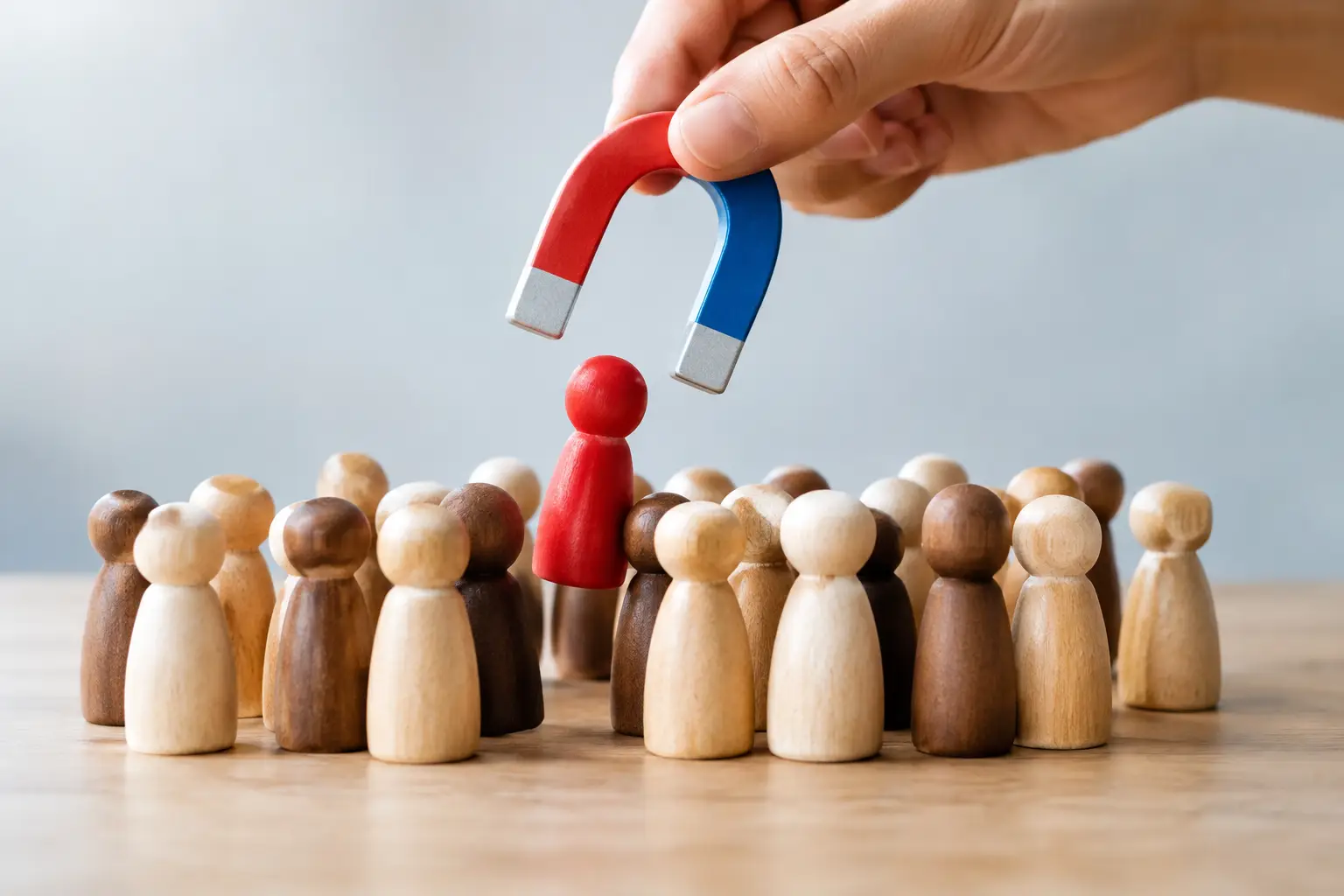
A false claim rarely arrives wearing a fake mustache and carrying a sign that says, “Hello, I am misinformation.” It usually comes dressed as a worried neighbor, a clipped video, a confident post from someone who once predicted the weather correctly. That is precisely how misinformation changes public opinion: not always by persuading us with one spectacular lie, but by making a questionable story feel familiar, plausible, and socially safe to repeat.
The uncomfortable part is that this can happen to intelligent people. Perhaps especially to intelligent people. We are very good at finding reasons for what we already suspect. Give us a graph, a rumor, and a villain, and many of us can produce a courtroom argument before the coffee has cooled.
How misinformation changes public opinion
Public opinion does not move like a referendum result, with a neat click from one view to another. It shifts more like a crowded train platform. A few people step in one direction, others follow because they assume there must be a reason, and before long the platform has changed shape.
Misinformation exploits that process. It introduces doubt where certainty was never realistic, certainty where caution is required, and suspicion where ordinary disagreement would have been enough. Its most effective version is often not an outrageous fabrication. It is a partial truth with the inconvenient parts removed.
Take a short video of a politician stumbling over an answer. It may be genuine. But was the question edited out? Was the answer taken from a two-hour interview? Did the person correct themselves thirty seconds later? The clip does not need to prove incompetence. It only needs to plant a handy little seed: “Something is off here.” That seed can survive every later correction because it fits neatly into a story people already like.
This matters because people do not form views on taxes, migration, vaccines, climate policy, war, artificial intelligence, or crime by reading complete evidence files. They form them while commuting, scrolling, talking to family, and trying to get through a week with too many passwords. The information environment rewards speed. Judgment requires time. There is the business model of confusion in one sentence.
Repetition is mistaken for proof
One of misinformation’s oldest tricks is also one of its cheapest: say it again.
A statement heard repeatedly becomes easier to process. Our brains often interpret that ease as a sign of truth. It is not stupidity. It is mental economy. If every claim required a fresh forensic investigation, nobody would ever get dinner on the table.
The problem starts when repetition comes from different directions that only appear independent. A claim begins in an anonymous account, is repeated by a commentator, is discussed by critics trying to debunk it, and then lands in a group chat as, “Have you heard about this?” By then, the original source may be gone, but the impression remains. Familiarity has quietly replaced verification.
Corrections are necessary, but they have limits. A correction may reach fewer people than the original falsehood. It may arrive after a person has already woven the claim into their worldview. And if it is delivered with contempt, it can harden the very resistance it hopes to soften. Nobody enjoys being told they have been fooled, particularly by someone who sounds delighted about it.
That does not mean we should handle falsehoods with velvet gloves. It means accuracy needs a better delivery system than a scolding.
Outrage turns a claim into a team badge
Facts travel, but emotion gets upgraded to first class.
Misinformation spreads fastest when it makes us angry, frightened, disgusted, or triumphant. These feelings do something powerful: they reduce the urge to pause. A claim that threatens our family, identity, livelihood, or country feels urgent before it has been checked. Sharing it can feel like taking action.
That is why many deceptive messages are designed less as arguments than as invitations to join a side. They tell us who is dangerous, who is laughing at us, who is hiding the truth, and who deserves blame. Once a topic becomes a badge of belonging, changing one’s mind can feel like betraying friends rather than revising an opinion.
This is where public debate becomes especially brittle. A policy question that ought to involve trade-offs becomes a morality play. You are either for safety or for chaos. For ordinary people or for shadowy elites. For progress or for the return of horse-drawn carts. The details are not merely neglected. They become suspicious.
There is a real human desire underneath this. People want a world that makes sense and a group that sees what they see. Misinformation offers both, often in a conveniently shareable package. Reality has the irritating habit of requiring footnotes.
The algorithm is not the whole villain
It is tempting to blame social media platforms for everything. They deserve a substantial portion of the bill. Systems that reward attention naturally favor material that startles, enrages, or confirms a fear. A calm explanation of pension reform is unlikely to beat a video claiming that “they are stealing your retirement next Tuesday.”
Still, blaming algorithms alone is too comfortable. Algorithms amplify human appetite. We click because we are curious, anxious, partisan, bored, or looking for a small hit of moral superiority. The machine learns quickly that our indignation has excellent engagement figures.
Traditional media can contribute as well. A dramatic but weak claim may receive coverage because it creates conflict. Political actors may repeat it because denial gives them visibility. Even well-meaning commentators can keep a rumor alive by treating every absurdity as a serious controversy. Not every fire needs a panel discussion; sometimes it needs a bucket of water and less oxygen.
The trade-off is obvious. Open societies should not appoint a Ministry of Approved Thoughts. Governments make mistakes, experts disagree, and institutions sometimes deserve hard scrutiny. Labeling every inconvenient claim as misinformation is itself a useful way to avoid debate.
The standard should be tougher and simpler: What is the evidence? Who benefits from this framing? What would change your mind? If those questions cannot be asked without someone shouting “censorship,” the conversation is already in trouble.
Why doubt can be more damaging than belief
The goal of misinformation is not always to make everyone believe one particular lie. Sometimes it is enough to make people doubt everything.
If citizens conclude that all journalists are liars, all scientists are bought, all elections are rigged, and every institution is hiding something, they do not become fiercely independent thinkers. More often, they become exhausted. Exhausted people withdraw, choose whatever story comforts them, or follow the loudest voice in the room.
That is a serious democratic vulnerability. Public life depends on some shared ability to establish basic facts, even while arguing passionately about what to do next. We can disagree about immigration policy, energy choices, or the proper limits of AI. But if we cannot agree whether a document is real, a vote was counted, or a photograph has been manipulated, disagreement becomes an endless swamp.
For international audiences, the pattern is familiar. Foreign influence campaigns do not always need to invent a nation’s tensions. They can simply find existing fractures and poke them with remarkable patience. A society already worried about housing, wages, public safety, or cultural change offers plenty of raw material. The most effective propaganda often says, “You were right to be worried,” then supplies a false culprit and an easy answer.
A practical habit: slow the hand before sharing
No individual can fact-check the whole internet. Nor should ordinary citizens be expected to behave like a research department every time a cousin posts a suspicious meme. But a few habits make a meaningful difference.
First, distinguish between a claim and its evidence. A screenshot is a claim. A video is a claim until you know when, where, and how it was made. A person with a blue checkmark, a doctorate, or an excellent haircut still has to show their work.
Second, look for the original context before reacting to the edited version. If a claim makes you instantly furious or delighted, that is not proof it is wrong. It is a good reason to take an extra minute.
Third, resist the urge to turn every correction into a personal duel. Ask questions that leave the other person room to reconsider. “Where did that figure come from?” works better than “You have fallen for nonsense again.” The first invites thought. The second invites trench warfare, and the internet has enough trenches already.
Finally, make room for uncertainty. Saying “I do not know yet” is not intellectual weakness. It is a small act of civic hygiene. The people most certain that every complex issue has one obvious explanation are often selling something, even if the product is just their own importance.
Public opinion will always be vulnerable to manipulation because it is made of human beings, not calculators. That is not a reason for despair. It is a reason to be a little slower with outrage, a little stricter with evidence, and a little more generous toward the person who is willing to revise a view in public. In a noisy age, that may be one of the bravest things a citizen can do.