What Causes Extreme Wildfire Seasons Today?
October 21, 2026
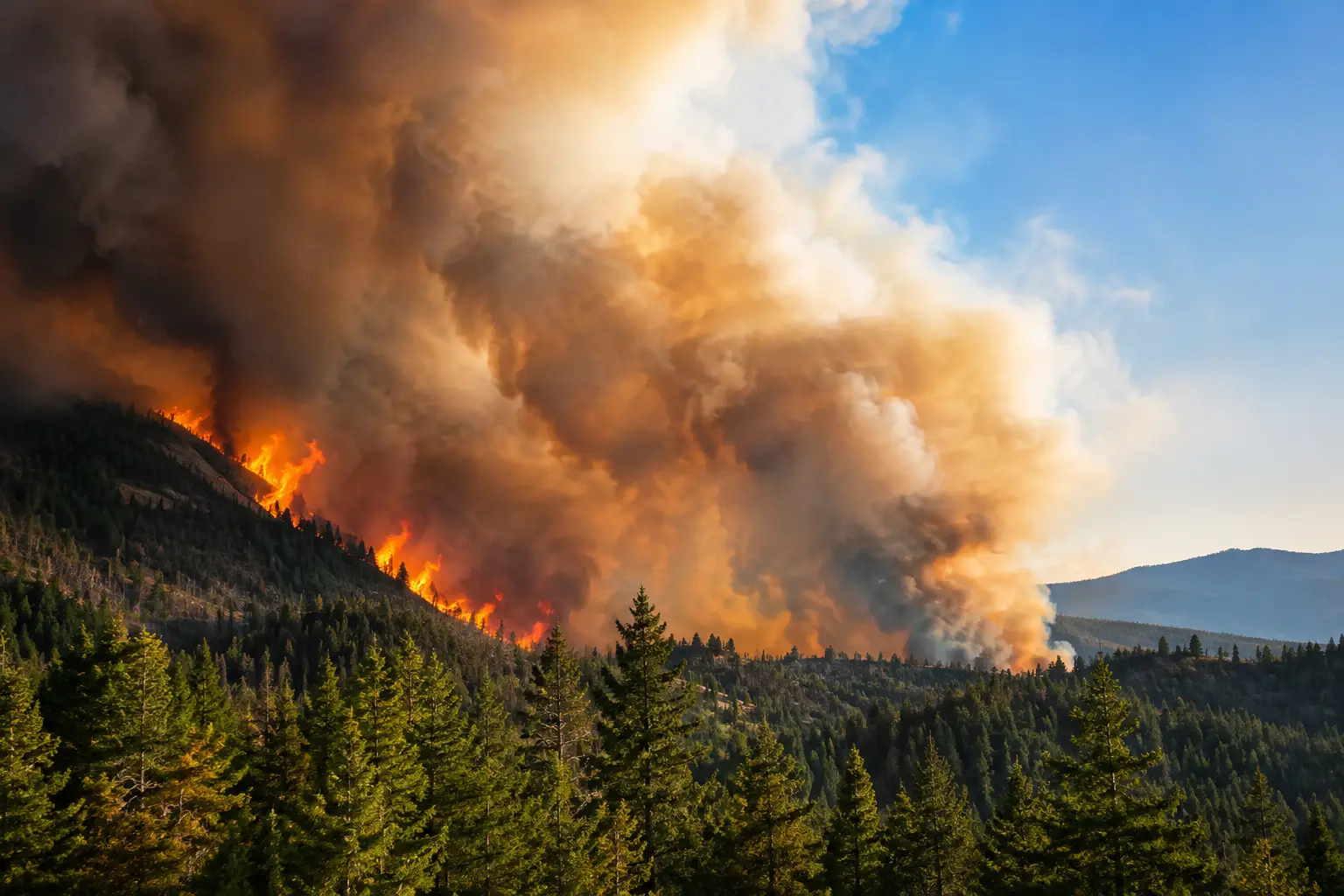
A wildfire season does not become extreme because one careless camper drops one match. That match may be the final insult, but the real story started months, sometimes years, earlier. Asking what causes extreme wildfire seasons is a bit like asking what causes a financial crash: one dramatic event gets the headlines, while a stack of quieter decisions and conditions did most of the work.
The uncomfortable answer is that extreme fire seasons are rarely natural accidents. They are chain reactions. Heat dries the landscape, drought weakens plants, wind turns small flames into running fires, and people keep building closer to places designed to burn. Add climate change, neglected land management, overloaded emergency services, and an occasional idiot with fireworks, and the word "unprecedented" begins to look less like a surprise and more like a scheduling issue.
What Causes Extreme Wildfire Seasons?
Fire needs three basic ingredients: fuel, oxygen, and heat. In a forest or grassland, fuel means dry grass, shrubs, fallen branches, dead trees, and sometimes entire hillsides full of vegetation. Oxygen is generously supplied by the atmosphere. Heat can come from lightning, machinery, power lines, arson, a barbecue, or an exhaust pipe parked in dry grass.
An extreme season happens when those ingredients arrive together at scale, for a long time, over a large area. The crucial point is duration. A hot afternoon can produce a local fire. Weeks of unusual heat and low humidity can turn a whole region into something alarmingly close to kindling.
Heat and drought turn vegetation into fuel
Plants are not just scenery. Living vegetation contains water, which makes it harder to ignite. During prolonged drought, moisture drains from grasses, leaves, shrubs, and wood. Dead material becomes especially dangerous because it dries quickly and burns readily.
High temperatures speed up that drying process. A heat wave also pulls moisture from soils, streams, and forests, leaving landscapes less able to resist a spark. This is why the phrase "hot and dry" is more than weather small talk. It is a fire forecast in two words.
Drought does not have to mean an empty blue sky for six months. A region can receive some rain and still face serious fire risk if temperatures remain unusually high, snow melts early, or rainfall arrives in brief downpours that run off before replenishing the soil. Nature, inconveniently, does not use the same accounting system as the evening weather report.
Wind supplies speed, oxygen, and chaos
Wind is where a difficult fire becomes a frightening one. Strong, dry winds feed flames with oxygen, push fire across the landscape, and carry burning embers far beyond the main fire line. Those embers can start new fires ahead of the original blaze, sometimes across roads, rivers, and supposedly reassuring firebreaks.
This is why a fire can appear manageable at breakfast and force evacuations by lunch. Fire behavior is not polite. It does not respect property lines, municipal budgets, or the confidence of a politician standing in front of a map.
Wind also makes firefighting more dangerous. Aircraft may be grounded, smoke may obscure escape routes, and crews can find themselves facing a fire that has changed direction within minutes. In such conditions, even well-equipped services are dealing with physics, not a shortage of good intentions.
Climate Change Loads the Dice
Climate change does not ignite every wildfire. Lightning still strikes, electrical equipment still fails, and humans still make remarkably poor decisions around dry vegetation. But a warming climate makes the conditions for large fires more frequent and more severe in many regions.
Longer hot periods extend the fire season. Earlier snowmelt can leave mountains and forests dry sooner. Warmer nights give vegetation less chance to recover moisture. In some places, hotter and drier conditions stress trees, making them more vulnerable to insects and disease. Dead trees then add to the available fuel.
The effect varies by landscape. Not every country, forest, or year follows the same pattern. Some regions may see more rainfall overall, yet still experience more dangerous fire weather because rain falls at the wrong time or arrives in violent bursts separated by long dry spells. That is the nuisance of climate risk: averages can sound reassuring while extremes do the damage.
For Europe and North America alike, the practical question is no longer whether climate change is the sole culprit. It plainly is not. The question is whether governments, insurers, developers, and households are adjusting to a climate that increasingly favors fire-friendly conditions. So far, the answer often resembles a smoke alarm with the batteries removed because the beeping was annoying.
The Fuel Problem Is Also a Human Problem
For more than a century, many fire-prone regions treated every wildfire as an enemy to be extinguished immediately. That instinct is understandable. Nobody watches flames approach a town and proposes a philosophical seminar. Yet total suppression can create a longer-term problem.
Many ecosystems evolved with periodic, lower-intensity fires. These fires cleared grasses, leaf litter, and small shrubs before they accumulated into heavy fuel loads. When every fire is suppressed for decades, vegetation can build up. Then, when an ignition finally occurs under hot, dry, windy conditions, the result may be a much larger and more intense blaze.
That does not mean authorities should casually let fires burn. Near homes, infrastructure, or vulnerable ecosystems, suppression is essential. It means land management requires choices before an emergency begins. Controlled burns, selective thinning, grazing, and clearing vegetation near communities can reduce risk. Each tool has trade-offs. Prescribed burns create smoke and carry their own risk if conditions change. Thinning costs money and can be abused as a cover for commercial logging. Grazing is useful in some landscapes and irrelevant in others.
There is no magic rake large enough to tidy an entire continent. But pretending that forests manage themselves beautifully after a century of human intervention is not a serious policy either.
More People Live Where Fire Wants to Be
The wildland-urban interface is the slightly bureaucratic name for the zone where homes meet flammable vegetation. It is growing in many countries because people like trees, views, space, and the general idea of living close to nature. Fair enough. Nature, however, does not sign a contract promising to remain picturesque.
As more homes are built in fire-prone areas, more ignition sources appear: vehicles, machinery, power infrastructure, outdoor cooking, and human carelessness. At the same time, more structures need protection when a fire starts. Firefighters may have to defend neighborhoods rather than focus solely on containing the edge of a blaze.
Building standards matter here. Fire-resistant roofs, protected vents, cleared space around homes, nonflammable landscaping, and reliable evacuation routes can make a major difference. These measures are not glamorous. Nobody boasts at a dinner party about their ember-resistant venting. But survival often depends on boring details performed before the sky turns orange.
Ignition Still Matters
In many populated areas, people start a large share of wildfires, deliberately or accidentally. That does not make climate and land management irrelevant. It explains why prevention has to include behavior as well as landscape policy.
Power lines deserve special attention. High winds, damaged equipment, and dry vegetation are an unhappy trio. Utilities can reduce risk through inspection, maintenance, vegetation management, and, in extreme conditions, carefully planned power shutoffs. Those shutoffs are disruptive, particularly for people who depend on electricity for medical equipment, work, or cooling. But so is losing an entire town.
Lightning remains a major natural ignition source, especially in remote areas. A dry thunderstorm is particularly dangerous: lightning arrives with little rainfall, providing sparks without the dampness that might limit them. It is the meteorological version of receiving a bill without the service.
The Season Is Also a Test of Preparedness
Extreme wildfire seasons expose weaknesses that existed long before the first evacuation order. Are local fire services staffed and equipped? Do communities have warning systems people understand? Can older residents leave quickly? Are roads designed for thousands of cars moving out while emergency vehicles move in? Does insurance reward risk reduction, or merely discover it after the ashes cool?
The answers cannot be left entirely to individual homeowners. A family can clear its yard and still be trapped by a blocked road, a failing power line, or a neighboring property full of combustible debris. Wildfire resilience is a shared system, which makes it politically awkward. Shared systems require shared spending, regulations, and arguments at town meetings. Democracy is rarely at its most photogenic when someone suggests cutting down ornamental junipers.
Still, there is room for practical agency. Communities can prepare evacuation plans, reduce fuels around homes, enforce sensible building codes, protect critical infrastructure, and use fire-weather warnings honestly. Governments can fund prevention with the same seriousness they bring to emergency response. Spending only after disaster strikes is not thrift. It is simply expensive procrastination.
The next extreme wildfire season will not be caused by one villain in a black cape. It will emerge from weather, warming, accumulated fuel, human expansion, and choices postponed for too long. The useful response is not panic or fatalism. It is to stop treating fire as an occasional interruption and start treating it as a condition of the future that can still be managed, if we are willing to do the unglamorous work before the smoke arrives.