When Does Surveillance Become Excessive? Draw the Line
November 3, 2026
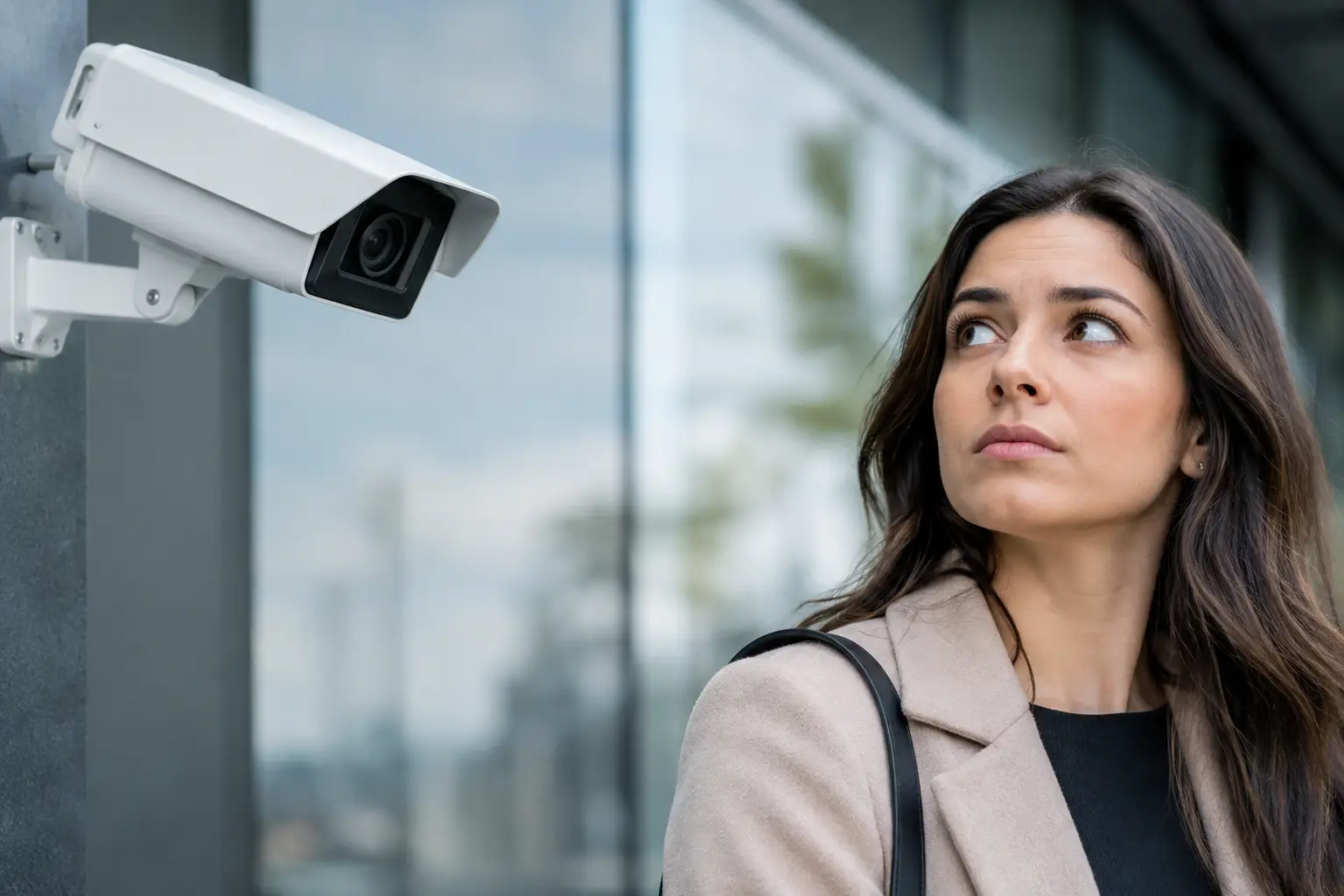
The camera above the supermarket checkout used to feel harmless. It was there to discourage theft, perhaps to settle the occasional argument over who slipped a bottle of wine into a coat pocket. Now that same visit can generate a small biography: when you arrived, what you bought, which payment card you used, whether you paused at the pharmacy shelf, and possibly where you went next. When does surveillance become excessive? Usually not at the moment a camera appears, but when ordinary life becomes a continuous source of usable intelligence for someone else.
That distinction matters because the debate is often framed as a childish choice: privacy or safety. As if a burglar politely waits outside until we finish our philosophical discussion. Of course governments, employers, retailers, and homeowners have legitimate reasons to observe certain places and events. The question is not whether surveillance is ever justified. The question is who watches, for what purpose, for how long, with what limits, and what happens when the watcher gets it wrong.
Excessive surveillance starts with a power imbalance
A person looking through their front-door camera after a package disappears is not building an authoritarian state. A city placing cameras around a train station after repeated violent incidents is not automatically doing so either. Context matters.
Surveillance becomes excessive when people cannot realistically refuse it, cannot understand it, and cannot challenge its consequences. That is the heart of it. The trouble is not only being seen. It is being converted into data by an organization with more money, legal expertise, and computing power than you possess - while being told this is for your convenience.
Consent is often offered as the magic word. Click “accept,” receive a discount, and enjoy the modern world. But consent is rather thin when declining means you cannot use public transportation, apply for work, enter your apartment building, or access essential digital services. A choice made under practical pressure is not much of a choice. It is a velvet handcuff.
There is also a difference between observing an event and creating a permanent, searchable record of a person. A security guard noticing a disturbance in a parking lot is one thing. Software that recognizes faces, matches them to databases, maps associations, and preserves the result for years is another. The first is situational. The second can become infrastructure for suspicion.
Why “nothing to hide” misses the point
The familiar response is: “If you have nothing to hide, why worry?” It sounds sensible until you apply it to normal human behavior.
Most of us close the bathroom door despite having nothing criminal to conceal. We do not publish every private conversation, medical concern, financial setback, or political doubt. Privacy is not a hiding place for villains. It is the room in which a person can think, change their mind, make mistakes, and remain more than a file of predictions.
Surveillance changes behavior even when nobody is arrested, fined, or fired. A worker who knows every minute of their day is tracked may avoid a necessary bathroom break. A teenager who knows their online activity is monitored may stop searching for help about depression, sexuality, or family problems. A citizen who suspects attendance at a protest will be logged may stay home. The damage is quiet, which makes it politically convenient to ignore.
The most effective systems do not need to punish everyone. They only need to make enough people wonder whether they are being watched. That is remarkably efficient. It is also a poor foundation for a free society.
The problem is not the camera. It is the system behind it.
A camera can be a useful tool. So can a license-plate reader, a workplace badge, a smart doorbell, or location data from a phone. None of these objects is morally guilty by itself. The real issue is accumulation.
One data point says little. Thousands of data points tell a story. Combine location history, purchase behavior, web searches, health data, social connections, and face recognition, and the system may know things a person never explicitly disclosed. It can infer pregnancy, debt, religious practice, political leanings, a likely divorce, or a vulnerable moment. Then it can sell, score, target, deny, or manipulate.
This is where the cheerful phrase “data-driven” deserves a raised eyebrow. Data-driven toward what, exactly? Lower crime? Better customer service? Higher productivity? Fine goals can still produce ugly machinery when there are no boundaries. A company may begin by measuring delivery routes and end by treating drivers as anxious accessories to an algorithm. Governments may begin with counterterrorism and end with a database that is simply too useful not to use for everything else.
Mission creep is surveillance’s favorite hobby. It never arrives wearing a villain’s cape. It arrives in a meeting with a spreadsheet and the sentence: “Since we already have the data...”
A practical test: necessity, proportionality, and expiry
Before accepting a surveillance measure, citizens and decision-makers should ask a few unromantic questions. Is there a specific problem that cannot reasonably be addressed in a less intrusive way? Is the monitoring limited to the place, people, and time connected to that problem? And does it end?
That last question deserves more attention. Temporary powers and databases have a peculiar talent for becoming permanent. Storage is cheap, after all. But cheap storage is not the same as a good reason to retain a person’s movements or identity indefinitely.
A sensible system has a narrow purpose, independent oversight, short retention periods, and a real route to appeal errors. It does not hide behind trade secrecy when an algorithm affects someone’s job, insurance, housing, or freedom. If an organization cannot explain what it collects and why, it has not earned trust.
Accuracy matters too. Surveillance technologies make mistakes, and those mistakes do not fall evenly. False facial-recognition matches, biased risk scores, and flawed databases tend to create more trouble for people who already have less power to correct the record. An error in a spreadsheet can become an error at a border crossing, a workplace gate, or a police stop. “The computer says so” is not a defense. It is often the beginning of the problem.
Safety without surrendering the house keys
There are places where monitoring is plainly reasonable. Protecting a daycare entrance, investigating a credible threat, or securing sensitive infrastructure calls for more than a polite request that everyone behave. The grown-up position is not technological purity. It is disciplined restraint.
Public authorities should be held to a higher standard than private firms because they can compel, punish, and share information across institutions. But private firms should not get a free pass merely because their terms and conditions are longer than a Russian novel. A shopping app may not carry handcuffs, yet it can still build a profile that influences prices, opportunities, and choices.
We should also resist the lazy claim that surveillance is inevitable. Technology creates options; it does not make every option wise. A city can improve lighting, staffing, and street design instead of installing cameras on every corner. An employer can judge work by outcomes rather than counting mouse movements. A school can protect students without turning education into a rehearsal for permanent monitoring.
The line will never be perfectly fixed. A genuine emergency may justify measures that would be unacceptable in ordinary times. But emergencies must remain exceptions, not business models. The safest rule is also the most human one: collect the least information necessary, use it for the stated purpose, keep it briefly, and let people see and challenge what is held about them.
A free society does not ask its citizens to prove they deserve privacy. It asks institutions to prove they deserve access. That reversal may sound modest. It is, in fact, the difference between a camera that protects the public and a public quietly trained to live for the camera.