Life and the Soup Pot
“Thank you for being here. Your life ends here. Care has run out.”
World Problems, Future Solutions · 20
Ad Latjes · 10 November 2026
When a child asks for another bowl of soup and the pot is empty, we say there’s no soup left. What do we say to a woman who wants to spend her last days at home when there is no nurse available tonight?
Perhaps she has to stay in hospital another night. Perhaps we ask her daughter to stay with her at home. The daughter says she’ll work something out. In the corridor, she takes out her phone to call work.
On 9 November 2026, Margot Cloet of Zorgnet-Icuro and philosopher Ignaas Devisch discussed the limits of life-prolonging care on the Belgian programme De afspraak. The debate followed the outcry over entrepreneur Roland Duchâtelet’s proposal to cut spending on care for older people in their final year. The word final sounds precise. At a hospital bedside, often nobody knows whether a person has a year, a month or a few days. VRT · De afspraak
We only know the final year in hindsight
Researchers compared nine healthcare systems in Europe, North America and Asia. In their data from 2009–2011, care in the last twelve months of life accounted for 8.5 to 11.2 percent of total measured medical spending. The share varied by healthcare system. Belgium was outside the comparison. Health Affairs · International comparison
A US study illustrates how hard it is to tell whose final year has begun. In a model based on Medicare data, less than five percent of spending went to people whose estimated chance of dying within a year exceeded fifty percent. At the end of the year you can add up the costs. The doctor deciding whether to admit someone today has to consider that the person might recover. Science · Study on predictability
How long should we carry on?
Suppose a treatment might give you a few more weeks. How many of those weeks would you spend in hospital? Could you still go home? For one person, a small chance of extra time is enough to try. He wants to see his daughter again. Someone else wants to stay alert and asks how much of that time the treatment itself will take.
I’d want the doctor to tell me what is reasonably possible and where the uncertainty lies. Then I could say what matters to me. Sometimes you can agree to try a treatment, with a specific goal and a time to review the decision together. In Belgium, a patient can refuse treatment or withdraw consent. Even if someone decides against another treatment, they still need care. Someone has to relieve their pain, notice when they’re struggling to breathe and make time when they’re afraid. Belgian Federal Public Service · Patient rights · WHO · Palliative care
Who can come tonight?
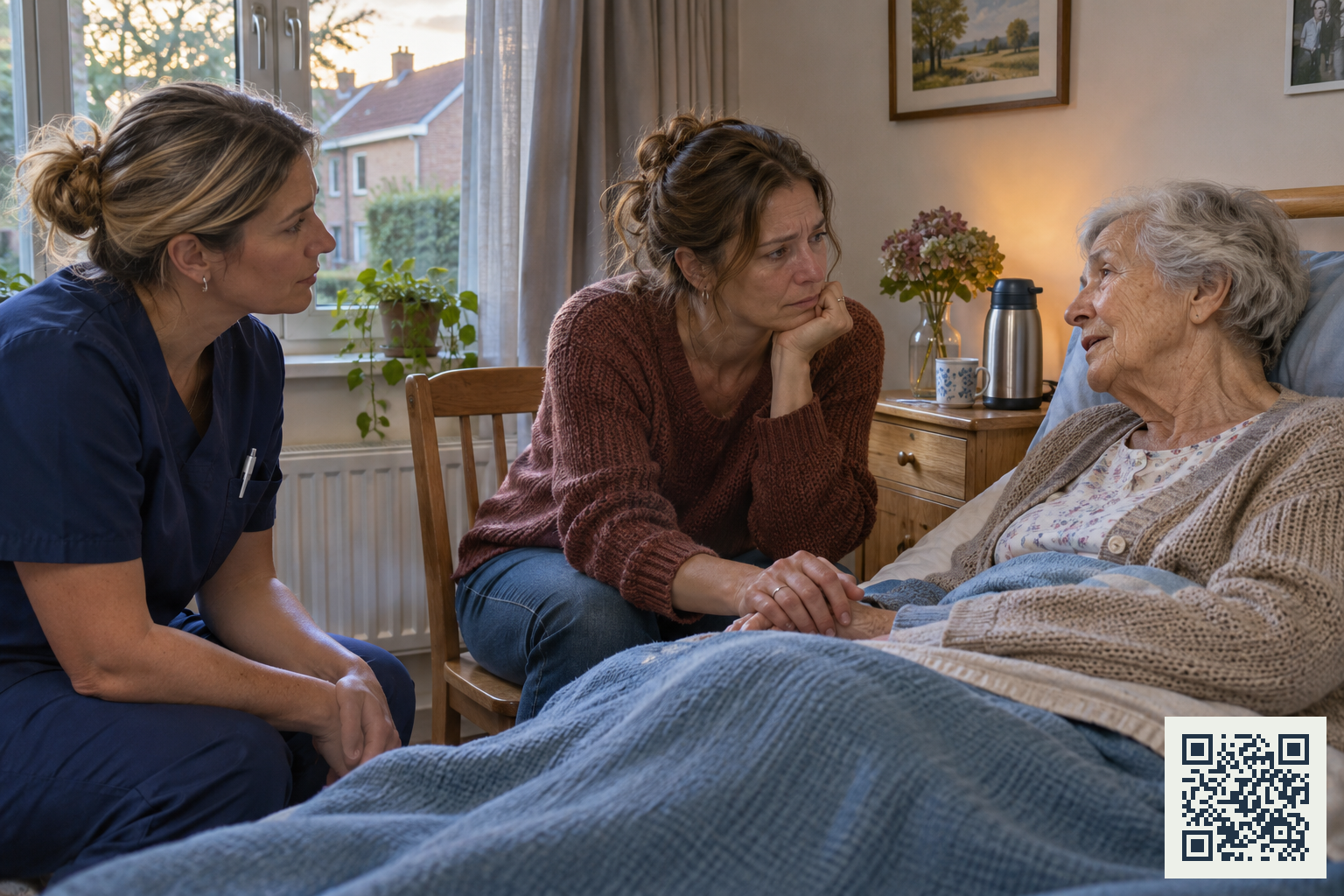
Money matters. A hospital bed can hold one patient at a time, and a nurse can only spend an hour once. It’s reasonable to ask what a demanding treatment can achieve and how much staff time it takes. Also count what happens when someone goes home sooner. On a budget sheet, it can look like a saving. For a partner or daughter, it can mean getting up every night.
The OECD and the European Commission estimated that the EU was short of around 1.2 million doctors, nurses and midwives in 2022 relative to minimum staffing thresholds. In Belgium, the KCE reported in 2020 that nurse staffing on the geriatric wards it studied was often below the level considered safe. Support workers can help with tasks such as bringing meals and escorting patients. They have to be available too. OECD and European Commission · Health at a Glance · KCE · Safe nurse staffing
A Belgian study found that people receiving palliative support at home had fewer hospital admissions and lower measured care costs in their final two weeks. The study found an association. Meanwhile, someone who wants to stay at home needs something very practical. A team that can come, even on a Friday evening. BMJ Open · Belgian study on palliative home care
We can do something about that today. Talk about treatment wishes before there’s a crisis. Make time in staff schedules for palliative home care, including evenings and weekends. Let support workers take on tasks that don’t require a doctor or nurse. And before discharge, ask family members what they can manage before counting on them in the care plan.
Europe, 2076 · A fictional closing scene
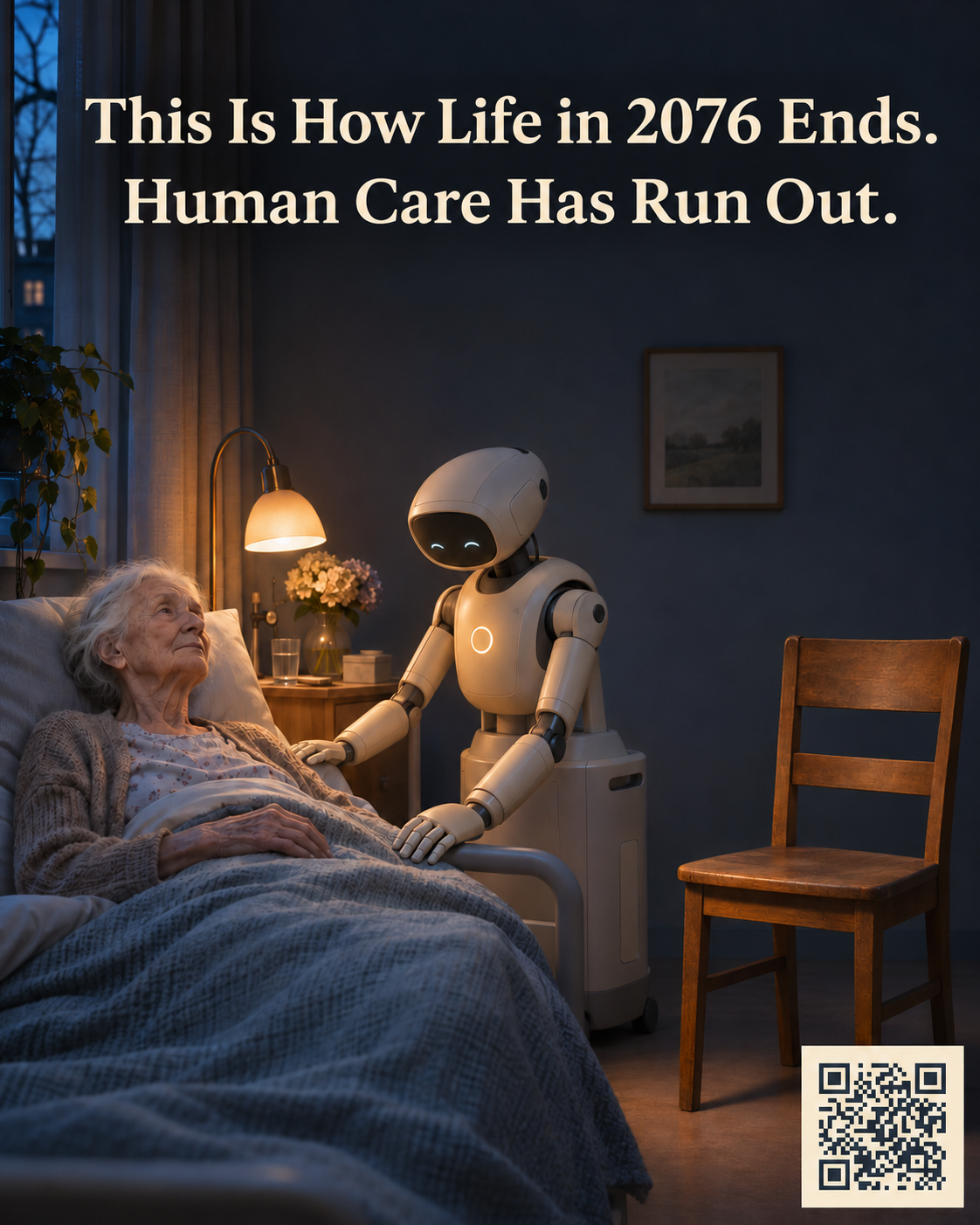
At quarter past three in the morning, Marie wakes up. She’s eighty-nine and struggling to breathe. Next to her bed is the care robot she was given when she left the hospital. The hospital closed a week later. Public healthcare has collapsed across Europe. Those who can afford it hire a doctor or nurse. Everyone else gets a robot and an app.
Marie opens the app. With one tap, she tells the robot to raise the head of her bed. That helps. It checks her oxygen level and when she last had her medication, then waits for her breathing to settle.
Then Marie asks if someone can come.
The app shows a nurse who can be there in forty minutes. Marie recognises her. It’s Noor, who used to visit her husband. She remembers how Noor always took off her coat and sat down first, even when she only had ten minutes.
Under Noor’s name is the price for one night. Almost all the pension Marie has left after rent. Her neighbour, who sold his business years ago, has a nurse upstairs who will stay until morning.
Marie closes the screen and opens it again. She thinks of her daughter. Yesterday she said Marie could call anytime. She also said she had to start work at six.
On the bedside table is a flask of soup her daughter brought. Marie asks the robot to pour a little into a cup. It does so carefully and holds the cup as she drinks. The soup is still warm.
“Would you like anything else?” the robot asks.
Marie looks at the chair beside her bed.
“For someone to sit in that chair for a while.”
Lees deze column in het Nederlands +
Het leven en de soeppan
“Bedankt dat u er was. Hier eindigt uw leven. De zorg is nu op.”
World Problems, Future Solutions · 20
Ad Latjes · 10 november 2026
Als een kind om nog een kom soep vraagt en de pan is leeg, zeggen we dat de soep op is. Wat zeggen we tegen een vrouw die haar laatste dagen thuis wil doorbrengen, terwijl er vanavond geen verpleegkundige beschikbaar is?
Misschien moet ze nog een nacht in het ziekenhuis blijven. Misschien vragen we haar dochter of die thuis kan overnachten. De dochter zegt dat ze het wel zal regelen. Op de gang haalt ze haar telefoon boven om haar werk te bellen.
Op 9 november 2026 bespraken Margot Cloet van Zorgnet-Icuro en filosoof Ignaas Devisch in De afspraak de grenzen van levensverlengende zorg. Aanleiding was de ophef over het voorstel van ondernemer Roland Duchâtelet om te besparen op ouderenzorg tijdens het laatste levensjaar. Het woord laatste klinkt precies. Aan een ziekenhuisbed weet vaak niemand of het om een jaar, een maand of een paar dagen gaat. VRT · De afspraak
Het laatste jaar kennen we achteraf
Onderzoekers vergeleken negen zorgstelsels in Europa, Noord-Amerika en Azië. In hun gegevens uit 2009–2011 ging 8,5 tot 11,2 procent van de totale gemeten medische uitgaven naar mensen in hun laatste twaalf levensmaanden. Dat aandeel verschilde per zorgstelsel. België zat niet in de vergelijking. Health Affairs · Internationale vergelijking
Een Amerikaanse studie laat zien hoe moeilijk het is om vooraf te weten voor wie dat laatste jaar begonnen is. In een model op basis van Medicare-gegevens ging minder dan vijf procent van de zorguitgaven naar mensen bij wie de geschatte kans op overlijden binnen een jaar boven de vijftig procent lag. Aan het eind van het jaar kun je de kosten optellen. De arts die vandaag over een opname beslist, moet rekening houden met de kans dat iemand herstelt. Science · Onderzoek naar voorspelbaarheid
Hoe lang gaan we door?
Stel dat een behandeling je misschien nog enkele weken geeft. Hoeveel van die weken breng je dan in het ziekenhuis door? Kun je nog naar huis? Voor de één is een kleine kans op extra tijd genoeg om het te proberen. Die wil zijn dochter nog zien. Een ander wil vooral helder kunnen blijven en vraagt hoeveel van die tijd de behandeling zelf zal kosten.
Ik zou willen dat de arts me vertelt wat er redelijkerwijs mogelijk is en waarover nog twijfel bestaat. Dan kan ik vertellen wat voor mij telt. Soms kun je afspreken een behandeling te proberen, met een concreet doel en een moment om samen opnieuw te beslissen. Een patiënt mag in België een behandeling weigeren of eerder gegeven toestemming intrekken. Ook als iemand afziet van een volgende behandeling, blijft er zorg nodig. Iemand moet de pijn verlichten, merken dat de patiënt benauwd wordt en tijd maken als die bang is. FOD Volksgezondheid · Patiëntenrechten · WHO · Palliatieve zorg
Wie komt er vanavond?
Geld speelt een rol. Een ziekenhuisbed en een uur van een verpleegkundige kunnen maar één keer tegelijk worden ingezet. Het is redelijk om te vragen hoeveel een ingrijpende behandeling oplevert en hoeveel personeel ze vraagt. Reken dan ook mee wat er gebeurt als iemand eerder naar huis gaat. Op de begroting kan dat een besparing zijn. Voor een partner of dochter kan het betekenen dat die voortaan iedere nacht moet opstaan.
De OESO en de Europese Commissie schatten dat de EU in 2022 ongeveer 1,2 miljoen artsen, verpleegkundigen en vroedvrouwen tekortkwam ten opzichte van minimale personeelsnormen. In België stelde het KCE in 2020 vast dat de verpleegkundige bezetting op onderzochte geriatrische afdelingen vaak onder het als veilig beschouwde niveau lag. Zorgondersteuners kunnen helpen met taken zoals maaltijden brengen of patiënten begeleiden. Ook zij moeten beschikbaar zijn. OESO en Europese Commissie · Health at a Glance · KCE · Veilige personeelsbezetting
Een Belgische studie vond dat mensen met palliatieve thuisondersteuning in hun laatste twee weken minder vaak in het ziekenhuis werden opgenomen en lagere gemeten zorgkosten hadden. De studie toont een verband. Wie thuis wil blijven, heeft intussen iets heel concreets nodig. Een team dat kan komen, ook op vrijdagavond. BMJ Open · Belgische studie over palliatieve thuiszorg
Daar kunnen we vandaag iets aan doen. Bespreek behandelwensen voordat er een crisis is. Maak tijd in de roosters voor palliatieve zorg thuis, ook ’s avonds en in het weekend. Geef zorgondersteuners de ruimte om taken over te nemen waarvoor geen arts of verpleegkundige nodig is. En vraag bij ontslag eerst wat naasten aankunnen, voordat hun hulp in het zorgplan wordt ingetekend.
Europa, 2076 · Een fictieve slotscène
Om kwart over drie ’s nachts wordt Marie wakker. Ze is negenentachtig en krijgt moeilijk lucht. Naast haar bed staat de zorgrobot die ze bij haar ontslag uit het ziekenhuis heeft meegekregen. Het ziekenhuis sloot een week later. Overal in Europa is de publieke zorg ingestort. Wie het zich kan veroorloven, huurt een arts of verpleegkundige in. De rest krijgt een robot en een app.
Marie opent de app. Met één druk op het scherm laat ze de robot haar hoofdeinde omhoogzetten. Dat helpt. Hij meet haar zuurstof, controleert wanneer ze haar laatste medicatie kreeg en wacht tot haar ademhaling rustiger wordt.
Dan vraagt Marie of er iemand kan komen.
De app toont een verpleegkundige die over veertig minuten bij haar kan zijn. Marie herkent haar. Het is Noor, die vroeger bij haar man langskwam. Ze weet nog hoe Noor altijd eerst haar jas uittrok en ging zitten, ook als ze maar tien minuten had.
Onder Noors naam staat de prijs voor een nacht. Bijna het hele pensioen dat Marie overhoudt na de huur. Haar buurman, die jaren geleden zijn bedrijf verkocht, heeft boven een verpleegkundige die bij hem blijft tot de ochtend.
Marie sluit het scherm en opent het nog eens. Ze denkt aan haar dochter. Die heeft gisteren gezegd dat ze altijd mag bellen. Ze had er ook bij gezegd dat ze om zes uur moest beginnen.
Op het nachtkastje staat een thermos met soep die haar dochter heeft meegebracht. Marie vraagt de robot om een beetje in een kop te schenken. Hij doet het voorzichtig en houdt de kop vast terwijl ze drinkt. De soep is nog warm.
“Wilt u nog iets?” vraagt de robot.
Marie kijkt naar de stoel naast haar bed.
“Dat er even iemand op die stoel komt zitten.”
Watch the video
Free full-size images
You can download and share all three images.
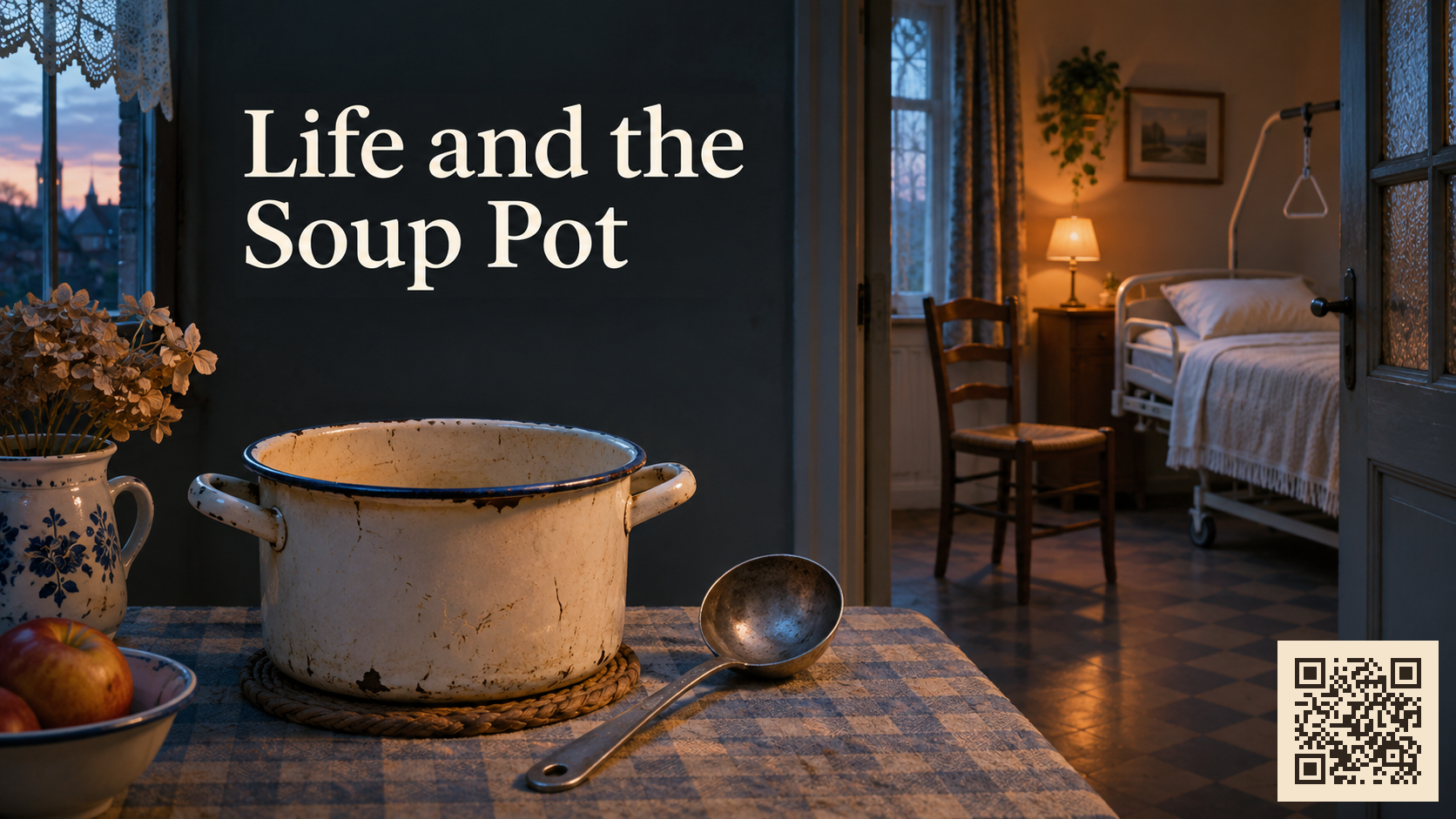
Title image: the empty soup pot
Home care today: a mother, daughter and nurse
Europe in 2076: Marie, a care robot and an empty chair